What’s the Best Way to Start a Diamond Painting Kit If You’re a Beginner?
Diamond painting has become a popular craft that combines creativity with relaxation. The hobby involves placing small resin drills onto a sticky canvas to create sparkly artwork. Many beginners feel unsure about where to start, but the process is straightforward once you understand the basics.
The best way to start a diamond painting kit as a beginner is to select a simple kit, set up your workspace properly, and start from one corner of the canvas. This approach helps build confidence and keeps the project organized from the start. The right preparation makes the difference between a frustrating experience and an enjoyable one.
Most beginner kits include all the necessary supplies, from the canvas to the tools. However, success depends on more than just having the right materials. It requires a few simple techniques and smart habits that make the process easier and more fun.
Choose a beginner-friendly kit with pre-printed adhesive canvas and resin drills
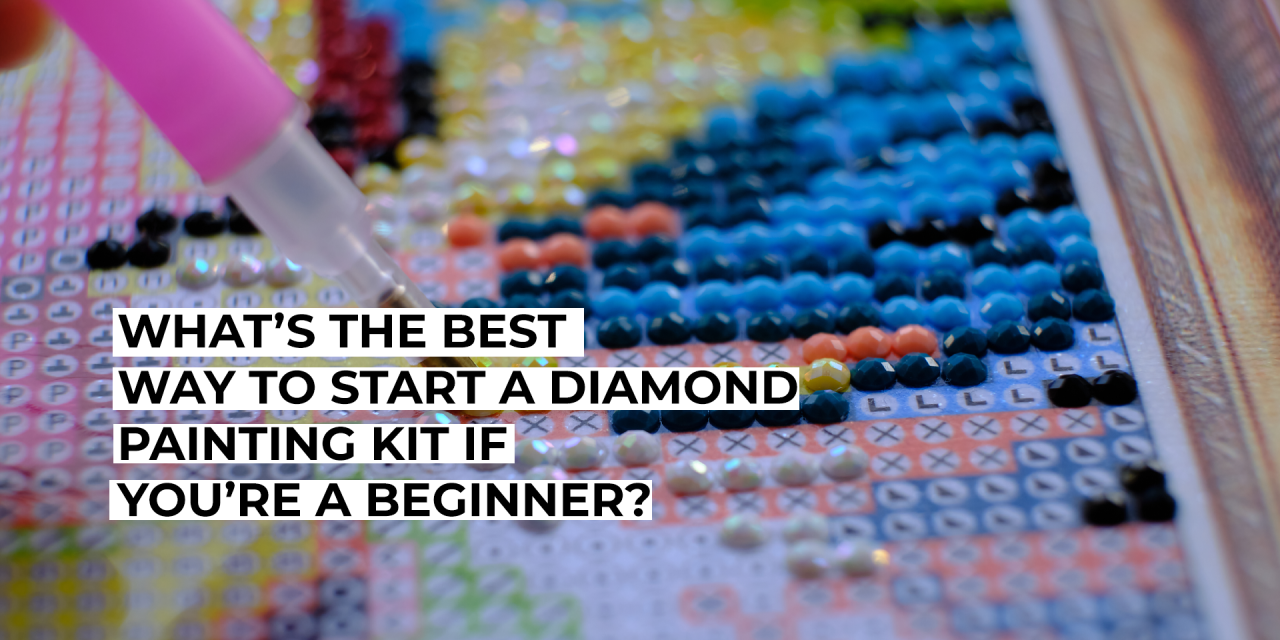
Beginners should select a kit that includes all the basic materials needed to complete their first project. A pre-printed adhesive canvas shows the design pattern and holds the pieces in place as someone works. Step-by-step diamond art kits provide clear instructions that guide new crafters through each part of the process.
These kits come with resin drills, which are the small, colorful pieces that create the final artwork. The applicator pen, wax, and tray are also included in most packages. New crafters don’t need to purchase extra supplies separately.
A smaller canvas size works best for first-time projects. Canvas sizes around 12×16 inches take about 10 to 20 hours to finish. This gives beginners enough time to learn the technique without feeling overwhelmed.
Round drills are easier to place than square ones for those just learning. The round shape allows for more forgiving placement on the canvas. Beginners can master the basic skills before they try more complex designs.
Organize your workspace with a tray, pen tool, and wax pad before starting
A clean workspace helps beginners complete their first diamond painting without frustration. Before a crafter starts to place any diamonds, they should gather the basic tools that come in most kits. These include a tray to hold the diamonds, an applicator pen tool, and a small wax pad.


The tray keeps tiny diamonds separate and makes them easy to pick up. Most trays have ridged surfaces that help align the diamonds in neat rows. A beginner should pour only one color into the tray at a time to avoid mix-ups.
The applicator pen needs a small amount of wax on its tip to grab each diamond. The wax pad provides this sticky surface. A crafter should press the pen tip into the wax before they pick up their first diamond.
This simple setup takes just a few minutes but saves hours of trouble later. An organized space lets beginners focus on the fun parts of diamond painting instead of searching for lost pieces.
Begin from the corner of the canvas to build confidence and maintain order
Most beginners find success by starting their diamond painting in one of the canvas corners. This approach creates a clear path forward and helps prevent mistakes early in the project.
The corner start method offers several practical benefits. First, it establishes a solid foundation that the rest of the design can build upon. Second, it keeps the work area neat because completed sections stay protected from accidental smudges or shifts.
Right-handed artists typically prefer to start in the top left corner, while left-handed artists often choose the top right. This prevents hands from dragging across finished sections and protects the adhesive canvas from oils and debris.
As each row gets completed, the painter can roll or fold the protective film back slowly. This systematic approach keeps the workspace tidy and the adhesive fresh. The visible progress from one corner also provides motivation to continue, which helps new crafters stay committed to finishing their first project.
Use the tray’s ridges to separate drills by color for easier application
The diamond painting tray comes with small ridges that serve a specific purpose. These grooves help organize the tiny drills by color and make them easier to pick up with the applicator tool.
To use the tray properly, a beginner should pour one color of drills into the tray at a time. Then, gently shake the tray back and forth. The drills will shift and settle into the ridges with their flat side down. This position makes it simple to scoop up each drill with the pen tool.
Some crafters prefer to keep multiple trays ready with different colors. This approach saves time because there’s no need to empty and refill the same tray repeatedly. However, new crafters can start with just one or two trays to avoid confusion.
The ridged design also prevents drills from rolling around or spilling. This feature helps maintain a clean workspace and reduces the frustration of chasing loose beads across the table.
Take breaks during long sessions to avoid fatigue and maintain precision
Diamond painting requires focus and attention to detail. However, long sessions can tire the eyes and hands, which leads to mistakes and less accurate bead placement.
Beginners should plan regular breaks during their crafting time. A good approach is to work for 20 to 30 minutes, then step away for 5 to 10 minutes. This simple schedule helps the brain stay sharp and prevents the hands from getting stiff.
During breaks, crafters can stretch their arms and shoulders or walk around the room. These short activities help blood flow and reduce tension in the neck and back. Some people find it helpful to look at objects far away to give their eyes a rest from close-up work.
Taking breaks actually improves the quality of the finished project. Fresh eyes catch errors more easily and place beads more accurately. Therefore, rest periods are just as important as the time spent at the canvas.
Conclusion
Diamond painting offers beginners a relaxing and creative hobby that anyone can master with the right approach. Starting with a small canvas and round drills helps new artists build confidence without frustration. The key is to work on a clean, flat surface and take breaks to avoid strain.
Most quality kits include all the necessary tools, so beginners don’t need to buy extra supplies. With patience and practice, anyone can create beautiful, sparkly artwork they’ll be proud to display.




From Family Factory Roots to Supermarket Shelves: The Inspiring Rise of Good Bubble
From a family toiletries business to landing in 268 Sainsbury’s stores nationwide, Manchester sisters Amy Lister and Sally Wordsworth share how resilience, skin-kind ingredients, and the Gruffalo helped Good Bubble reach supermarket shelves.

Beyond the Manosphere: Why Boys Need Men Who Speak Up
Dr Carolyne Keenan explores how online manosphere narratives impact young men and explains why positive male role models are essential for shaping a healthy, grounded vision of masculinity

Parenthood Unfiltered: The First Good Dad I Ever Knew
Rachaele Hambleton (Part Time Working Mummy) reflects on growing up without a positive father figure, escaping domestic abuse, and how finding a true partner changed everything for her and her six children. A moving look at presence, healing, and what makes a truly good dad.

Escape the Chaos & The Family Lunch: Food Review
Escape the chaos of the summer holidays and moving boxes with a true taste of Italy. Join us for a family-friendly review of San Carlo Alderley Edge, featuring their fantastic new kids’ menu, authentic Italian dishes, and a stress-free dining experience for parents and children alike.

Beyond “Daddy Daycare”: What Day-One Rights Mean for Working Dads
From day-one flexible working requests to dismantling outdated “daddy daycare” tropes, the UK workplace landscape is shifting. Discover what the new legislation means for working fathers, co-parenting equality, and your career.

Ryan Libbey on the True Meaning of Strength, Parenting & Modern Masculinity
Fatherhood and a traumatic first year reshaped Ryan Libbey’s understanding of true strength, partnership, and modern masculinity. From navigating primary caregiving and supporting his partner Louise through medical trauma to writing “Letters to Leo” and challenging the noisy toxicity of the “Manosphere,” Ryan shares his honest, vulnerable journey on what it really means to show up as a present dad.

Back to School 2026: The Ultimate Kids’ Essentials & Parent Hacks
Back to School Special Back to School 2026: The Ultimate Kids’ Essentials & Parent Hacks From seamless uniform upgrades to smart tech that keeps kids focused and safe, here is our editorial edit for the new school term. Between sorting uniforms, replacing outgrown...

Why Learning a Language as a Busy Parent Is One of the Best Things You Can Do (And How to Actually Make It Happen)
Travel Why Learning a Language as a Busy Parent Is One of the Best Things You Can Do (And How to Actually Make It Happen) No classroom. No fixed timetable. Just you, a real tutor, and a skill that'll stick around for life. When was the last time you did something...

Ibiza Comes to London: Why the Alto x Cotton Beach Club Collab Belongs on Every Parent’s Night-Off List
Ibiza isn’t on the cards for most of us this summer — but that doesn’t mean you can’t get a taste of it. Alto by San Carlo has partnered with the iconic Cotton Beach Club Ibiza for two exclusive evenings on the rooftop of Selfridges, London. Think sun-soaked Mediterranean food, live DJ sets, Champagne and London’s skyline as your backdrop. Two dates only — and honestly? You deserve this one.

Lisa Johnson: From £30K Debt to Multi-Millionaire – How a Mum of Two Built a Freedom-Focused Business
Discover how Lisa Johnson, award-winning entrepreneur and mum of twins, went from £30,000 in debt to building a multi-million-pound business in just seven years. In this exclusive interview, Lisa shares her journey through adversity, her strategies for scaling with passive income, and her honest advice for parents and entrepreneurs seeking financial freedom, work-life balance, and lasting impact. Keywords: Lisa Johnson, entrepreneur, passive income, business strategy, work-life balance, financial freedom, mumpreneur, online business, success story.
From Family Factory Roots to Supermarket Shelves: The Inspiring Rise of Good Bubble
From a family toiletries business to landing in 268 Sainsbury’s stores nationwide, Manchester sisters Amy Lister and Sally Wordsworth share how resilience, skin-kind ingredients, and the Gruffalo helped Good Bubble reach supermarket shelves.
Beyond the Manosphere: Why Boys Need Men Who Speak Up
Dr Carolyne Keenan explores how online manosphere narratives impact young men and explains why positive male role models are essential for shaping a healthy, grounded vision of masculinity
Parenthood Unfiltered: The First Good Dad I Ever Knew
Rachaele Hambleton (Part Time Working Mummy) reflects on growing up without a positive father figure, escaping domestic abuse, and how finding a true partner changed everything for her and her six children. A moving look at presence, healing, and what makes a truly good dad.
Escape the Chaos & The Family Lunch: Food Review
Escape the chaos of the summer holidays and moving boxes with a true taste of Italy. Join us for a family-friendly review of San Carlo Alderley Edge, featuring their fantastic new kids’ menu, authentic Italian dishes, and a stress-free dining experience for parents and children alike.
Beyond “Daddy Daycare”: What Day-One Rights Mean for Working Dads
From day-one flexible working requests to dismantling outdated “daddy daycare” tropes, the UK workplace landscape is shifting. Discover what the new legislation means for working fathers, co-parenting equality, and your career.
Ryan Libbey on the True Meaning of Strength, Parenting & Modern Masculinity
Fatherhood and a traumatic first year reshaped Ryan Libbey’s understanding of true strength, partnership, and modern masculinity. From navigating primary caregiving and supporting his partner Louise through medical trauma to writing “Letters to Leo” and challenging the noisy toxicity of the “Manosphere,” Ryan shares his honest, vulnerable journey on what it really means to show up as a present dad.
Back to School 2026: The Ultimate Kids’ Essentials & Parent Hacks
Back to School Special Back to School 2026: The Ultimate Kids’ Essentials & Parent Hacks From seamless uniform upgrades to smart tech that keeps kids focused and safe, here is our editorial edit for the new school term. Between sorting uniforms, replacing outgrown...
Why Learning a Language as a Busy Parent Is One of the Best Things You Can Do (And How to Actually Make It Happen)
Travel Why Learning a Language as a Busy Parent Is One of the Best Things You Can Do (And How to Actually Make It Happen) No classroom. No fixed timetable. Just you, a real tutor, and a skill that'll stick around for life. When was the last time you did something...
Ibiza Comes to London: Why the Alto x Cotton Beach Club Collab Belongs on Every Parent’s Night-Off List
Ibiza isn’t on the cards for most of us this summer — but that doesn’t mean you can’t get a taste of it. Alto by San Carlo has partnered with the iconic Cotton Beach Club Ibiza for two exclusive evenings on the rooftop of Selfridges, London. Think sun-soaked Mediterranean food, live DJ sets, Champagne and London’s skyline as your backdrop. Two dates only — and honestly? You deserve this one.
Lisa Johnson: From £30K Debt to Multi-Millionaire – How a Mum of Two Built a Freedom-Focused Business
Discover how Lisa Johnson, award-winning entrepreneur and mum of twins, went from £30,000 in debt to building a multi-million-pound business in just seven years. In this exclusive interview, Lisa shares her journey through adversity, her strategies for scaling with passive income, and her honest advice for parents and entrepreneurs seeking financial freedom, work-life balance, and lasting impact. Keywords: Lisa Johnson, entrepreneur, passive income, business strategy, work-life balance, financial freedom, mumpreneur, online business, success story.