
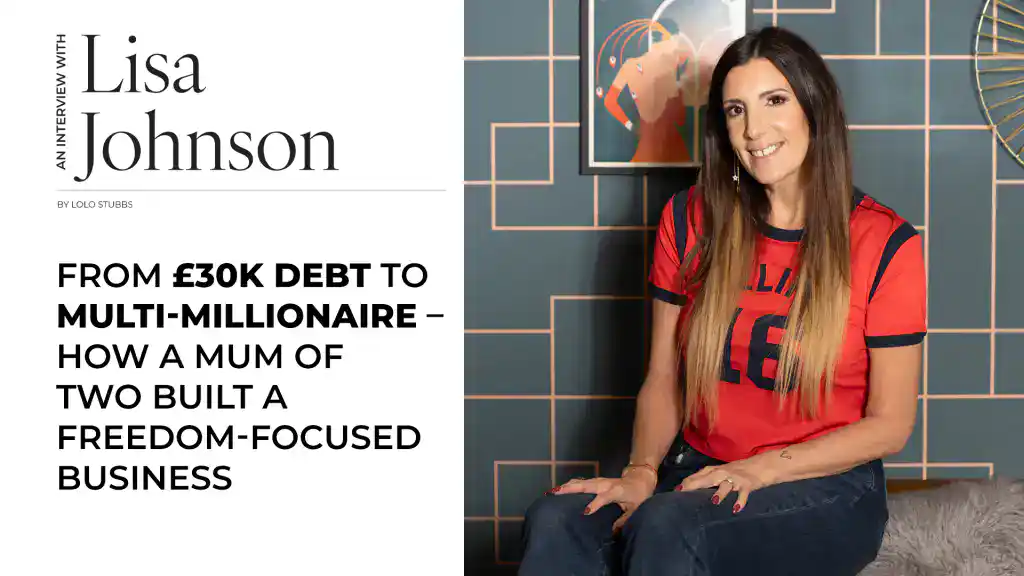
Lisa Johnson: From £30K Debt to Multi-Millionaire – How a Mum of Two Built a Freedom-Focused Business
Lisa Johnson
By Lolo Stubbs
Award-winning entrepreneur, Sunday Times best-selling author, speaker, podcast host and mum of two, Lisa Johnson doesn’t do fluff. She does results.
A strategist, mentor and straight-talking voice in the online business space, Lisa has built a reputation for helping ambitious women simplify their offers, sharpen their messaging and scale in a way that actually fits real life — not the “hustle harder” version we’ve all been sold.
What makes Lisa a standout (and why she’s a perfect BROOD cover) is the blend: big-picture thinking with practical, do-this-next steps… and a refreshingly honest take on what success costs, what it gives back, and how to build a business that doesn’t demand you disappear from your own life to keep it growing.
In this cover feature, Lisa shares her inspirational story from her school days, what made her enter the world of business, the lessons she’s learned the hard way, the decisions that changed everything, the success and the strategy she’d focus on if she had to start again tomorrow — with family, boundaries and ambition all in the mix.
Lolo: At what point in your life did you start a business — and how did that go?
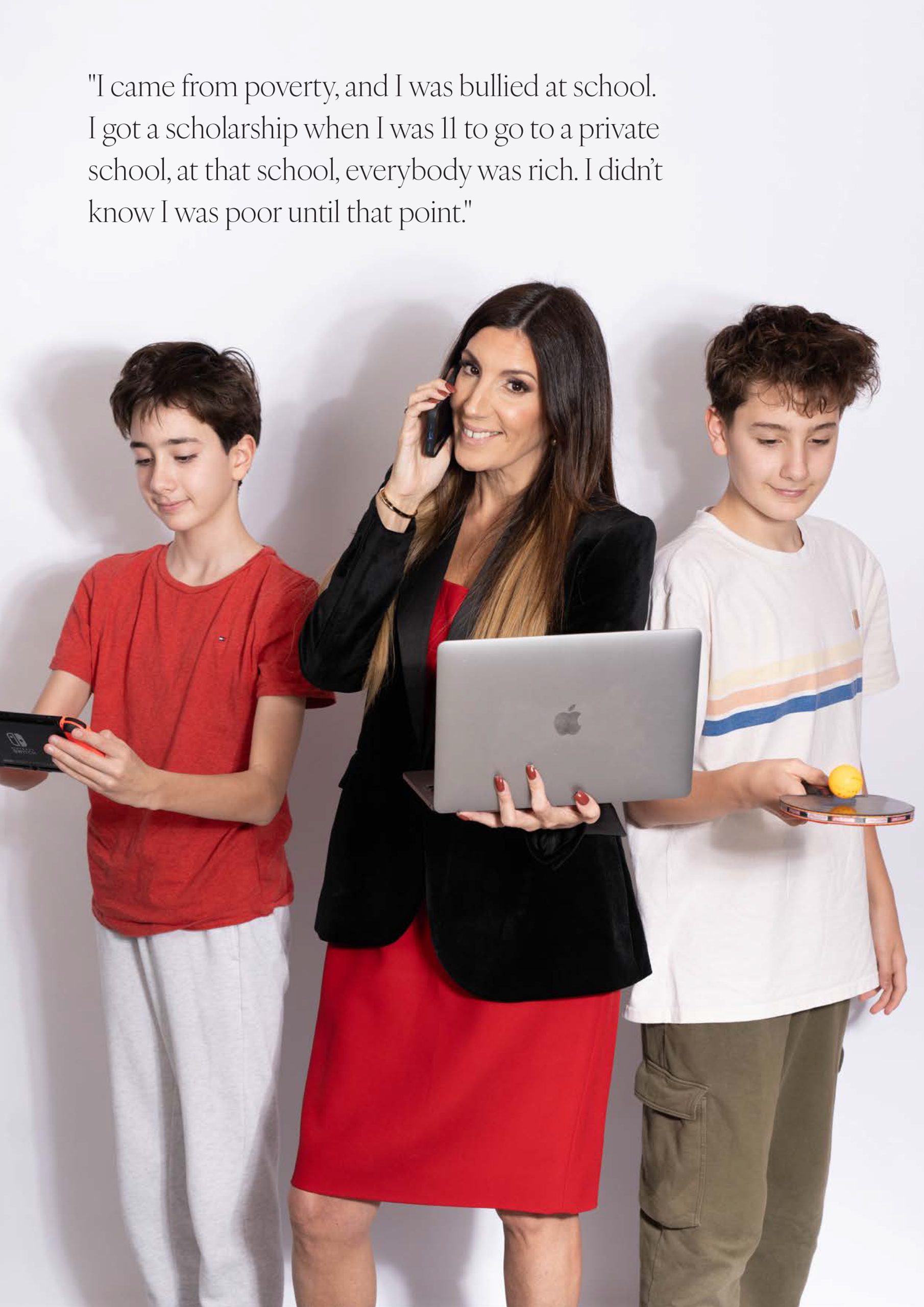
Lisa: “I didn’t actually start any kind of business until I was 37… maybe 38. I came from poverty, and I was bullied at school. I got a scholarship when I was 11 to go to a private school; at that school, everybody was rich. I didn’t know I was poor until that point, because all my friends were poor too — I lived on a council estate, and everyone was the same.”
“Then suddenly I was in one of the richest schools in the country, and I was very obviously someone who didn’t have much money. I wore the second-hand uniform, I had free school dinners, and my dad picked me up on his motorbike. I was from a single-parent family — I lived with my dad — and everyone else got picked up in Bentleys and Porsches. It was really obvious I was the odd one out. And I got bullied from that day.”
“I left school without many good qualifications because I just didn’t like going. Then I clawed my way up the corporate ladder. By 35, I was going through my second divorce, and I got pregnant with twins — and that changed everything.”
“I’d done quite well. I was in investment banking in the City, earning £60k, which was a lot for people where I came from. But I was going into Canary Wharf at 6am and coming home at 10pm, and I couldn’t do that anymore with two kids. So I found a job nearer to my house so that I could do a ‘proper 9–5’, found some good childcare, and at the time, the way I had to look at it was at least I saw the kids some of the time. But the problem was the only jobs around were assistant jobs again — like where I’d started 15 years before — so I started from scratch. I got into a lot of debt, about £30,000.”
“The problem was: what I got paid was basically the exact amount of the cost of the childcare I was paying. So I was working for nothing, and still trying to feed two kids. It was really hard. So I decided to start a business — like a side hustle — to try and make money. I started a wedding planning business. I got quite a lot of weddings, and I did a really good job in the first year.”
“Then I got a new boyfriend — who I’m now married to — and he said, ‘Okay, let’s see if you can leave your job’ (based on how well I was doing with the wedding planning), but we worked it out, and I was earning £1.15 an hour, because I didn’t know anything about business. I knew how to put on amazing weddings, but I didn’t know how to charge. I was undercutting, I didn’t understand business, niching, marketing… none of it.”
“So I sat there thinking: I either quit and accept I’m always going to live hand-to-mouth, always be in debt — I’m in generational debt at this point, so maybe it doesn’t even matter — or I learn business. But I didn’t have any money to learn business. But I decided to give it a go. I went to the library, got out every business book and self-development book, and I studied. I’d studied before — I did a law degree in my early 20s — so I knew I could do it.”
“I turned that wedding planning business around so it made the same amount as my corporate job. And after a couple of years — maybe less — people started asking how I’d done it. I started teaching them what I’d learned, but I cut out the jargon, because the thing is people don’t do business because they think it’s complicated. Business isn’t complicated — people make it complicated!”
“They’d go away and come back saying, ‘I tripled my revenue. I did exactly what you said.’ I was doing that [helping people with their business] for free, and then it occurred to me that maybe I could make a career of it. Wedding planning still meant I wasn’t seeing the kids — every weekend I was on my feet for 48 hours — it just wasn’t working for my life, so nearly nine years ago I started Lisa Johnson Strategist, teaching business principles.”
“At first, it was just wedding planners, then the wedding industry, and then people from all different industries started coming to me. And I was getting amazing results. That first year, I made £220,000, which blew my mind. It was ridiculous money, and I wasn’t working as hard as I was in the 9–5.”
“But then I hit an income ceiling. I’d left the 9–5 to have more time with the kids, and suddenly I was working more and more. I was working 6am to 11pm every day. People were saying, ‘Take my money, I want you to help me,’ and I was like, ‘I have no time.’ I tripled my prices — still no time. I couldn’t really put them up anymore. And I thought: there has to be a way to not work like this.”
“I heard someone on a podcast talking about passive income — arguing whether it exists — and I thought, ‘This is interesting.’ I took half the money I’d earned in year one and learned everything about passive income: dropshipping, affiliate marketing, cryptocurrency, memberships, and courses. Some were too hard, some needed too much capital, and some would work but take too long. But some worked — mainly memberships, courses, group programmes, workshops.”
“By the end of year two, I was working 30 hours a month and making over a million in profit. That’s when I thought, ‘Okay, I need to teach everyone how to do this — not business, but this: working online.’ Then COVID hit, and my whole world blew up.”
Lolo: Before we get into how it blew up — during that time, what was the most challenging thing to juggle? And how did that feel as a mum as well as a business owner?
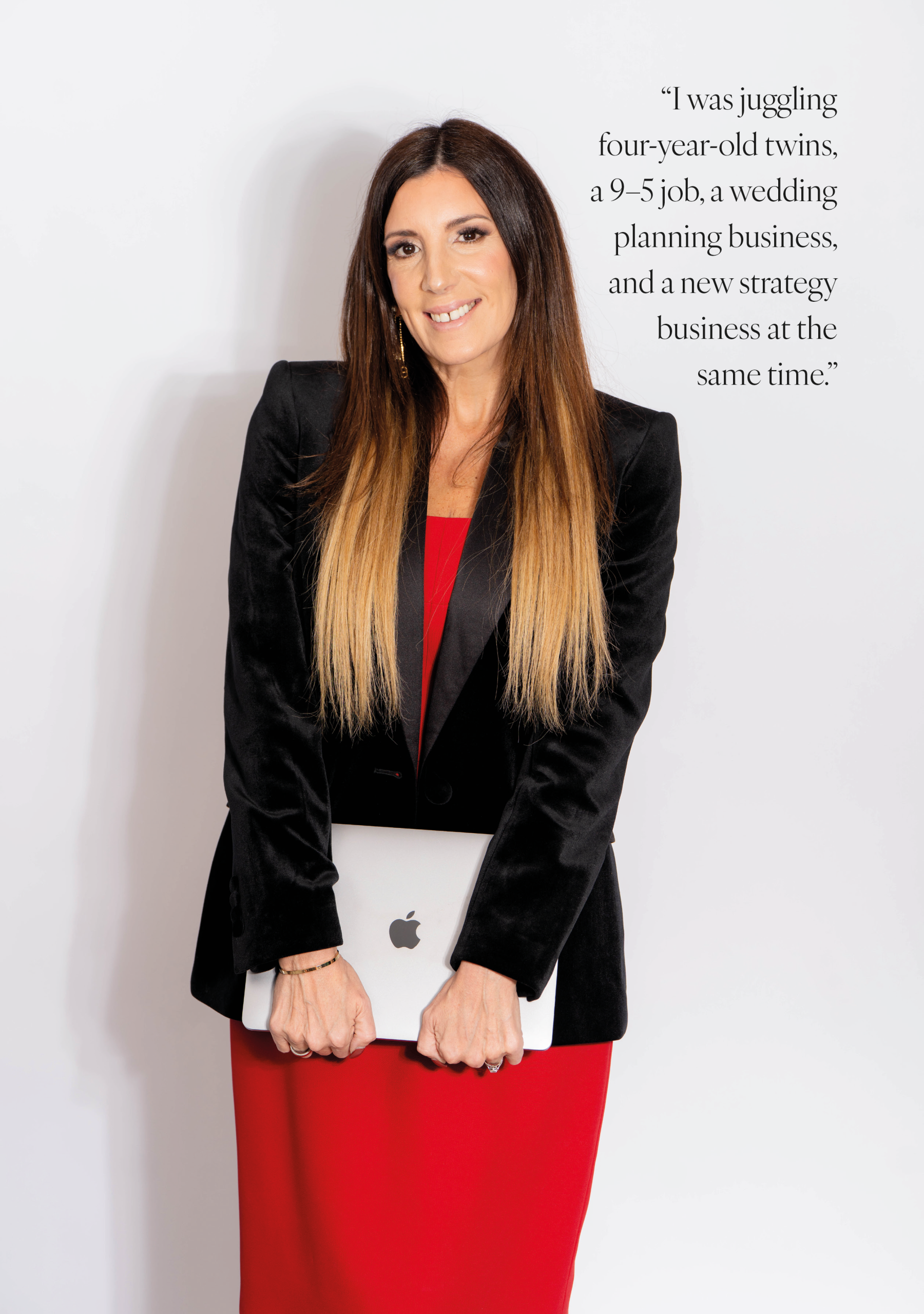
Lisa: “The hardest thing at the beginning, by far, was time. My kids were four. I was juggling four-year-old twins, a 9–5 job, a wedding planning business, and a new strategy business at the same time. The only time I could work on my business was 5–7 am. But sometimes the kids would wake up at 5am, so I couldn’t do it. I’d spend my lunch hour at work on it. I’d get home, deal with the kids, put them to bed at 7pm, then work 7–10pm. That was the only way.”
“I do believe, though, if you don’t have much time, you become more intentional with it. As soon as I got more time, I’d faff about — trying things I didn’t need to do. At the beginning, it was: will this make me money, yes or no? If it’s no, don’t do it. I was concentrated on money because I needed to get out of the hole.”
Lolo: And obviously having twins — that’s a lot, what was it in your mindset that made you keep going — when other people might think, “This is too much, I’m going to give up”? What drove you forward, and what techniques did you use to keep your mindset strong?
Lisa: “At the beginning, my mindset was actually okay. When I was working one-to-one with people, I didn’t mind — I was just working more and more. Then I got a phone call in the kids’ first week of school: I’d forgotten to pick them up. I had so much in my head, I couldn’t juggle it all, and I hadn’t realised it was 3 o’clock. I went to pick them up and saw their little faces, and I thought, ‘Okay. Something has got to change.’ That’s why passive income came in — because I needed to work in a way where my time wasn’t affected.”
“Money mindset was a big one for me, because I grew up with nothing. I genuinely believed people where I come from don’t make big money. I don’t know why — I just believed it. People where I come from don’t make six figures or have thriving businesses. And I was bullied by rich people, so I believed all rich people were bad people — and suddenly I was becoming rich. I was self-sabotaging all the time. People think passive income is a magic pill. It’s hard work for the first two years — you work more, not less. It’s not passive at the beginning. You’re learning how to launch, grow audiences, and you’re putting all your time into it. So yes, it was still a juggle. I missed nativity plays. I couldn’t take them to school myself. But in the back of my head was: if you carry on, there’ll be a time — when they can remember things more — where you’ll be with them all the time. I wanted to instil a work ethic in them. My parents had one, and the people I grew up around had a strong work ethic. So I never allowed guilt. I never allowed myself to believe there was such a thing as balance — because there isn’t. The only thing that makes us feel guilty is believing there is. If we accept that you might not be a great parent for a couple of years, so you can be an amazing one for the rest of their lives — that felt better to me. And that’s exactly what happened. I now spend all my time with them.”
Lolo: When you talk about money mindset and your background, what helped you understand your value and move from “I’m not going to make big money” — that self-sabotage, that feeling of being unworthy — to “No, I am valuable, and I can change this”?
Lisa: “A lot of it is inner work — whether that’s journaling, understanding who you are, and what’s happened in your life that’s led to certain patterns, especially around money mindset and self-esteem. I’d never done self-development, therapy, or any of those things, so I didn’t know I was self-sabotaging constantly. But there were patterns I’d repeated over and over. Like, I’d make money and then get rid of it as quickly as possible, because I was terrified that money goes. So I thought I may as well get rid of it before it can be taken from me. The more I studied money mindset and belief systems and confidence, things became apparent. My confidence was shot. I’d been bullied mercilessly. I was told I was ugly, stupid, would never amount to anything, poor, for so many years that I 100% believed it. It took so much effort to start believing in myself again. The only real way I did it was surrounding myself with people who believed in me — and borrowing their belief for a while, because I didn’t have it. And then, when you start helping people — that’s why I did things for free at the beginning — when people came back and told me their results, that gave me belief in myself. Like, ‘Okay, I can do this.’ And I think it’s okay to have imposter syndrome. I don’t even believe in it as a thing — I think we’ve given it a lovely, medically-sounding title so we don’t have to be visible in our business. ‘I’ve got imposter syndrome, I can’t do it,’ when actually we should all feel like a fraud sometimes when we start anything. It keeps us humble, and I think that’s okay.”
Lolo: Let’s go back to when everything blew up. You were doing well, you were succeeding — did you ever imagine it would take the turn it did? Tell us about that turning point.
Lisa: “I never imagined what would happen — and we didn’t know COVID was going to happen. By that point, I’d been telling people for a couple of years: ‘Come and work online.’ PTs, makeup artists — anyone I could get my hands on. Instead of one-to-one, you can do one-to-many. You can teach lots of people at the same time if you use social media and online resources. People would say, ‘Yeah, one day I’ll do that… but my one-to-one is going really well.’ Then COVID happened. The world suddenly wanted to work online — and there was me, telling people I’d been doing it for years.”
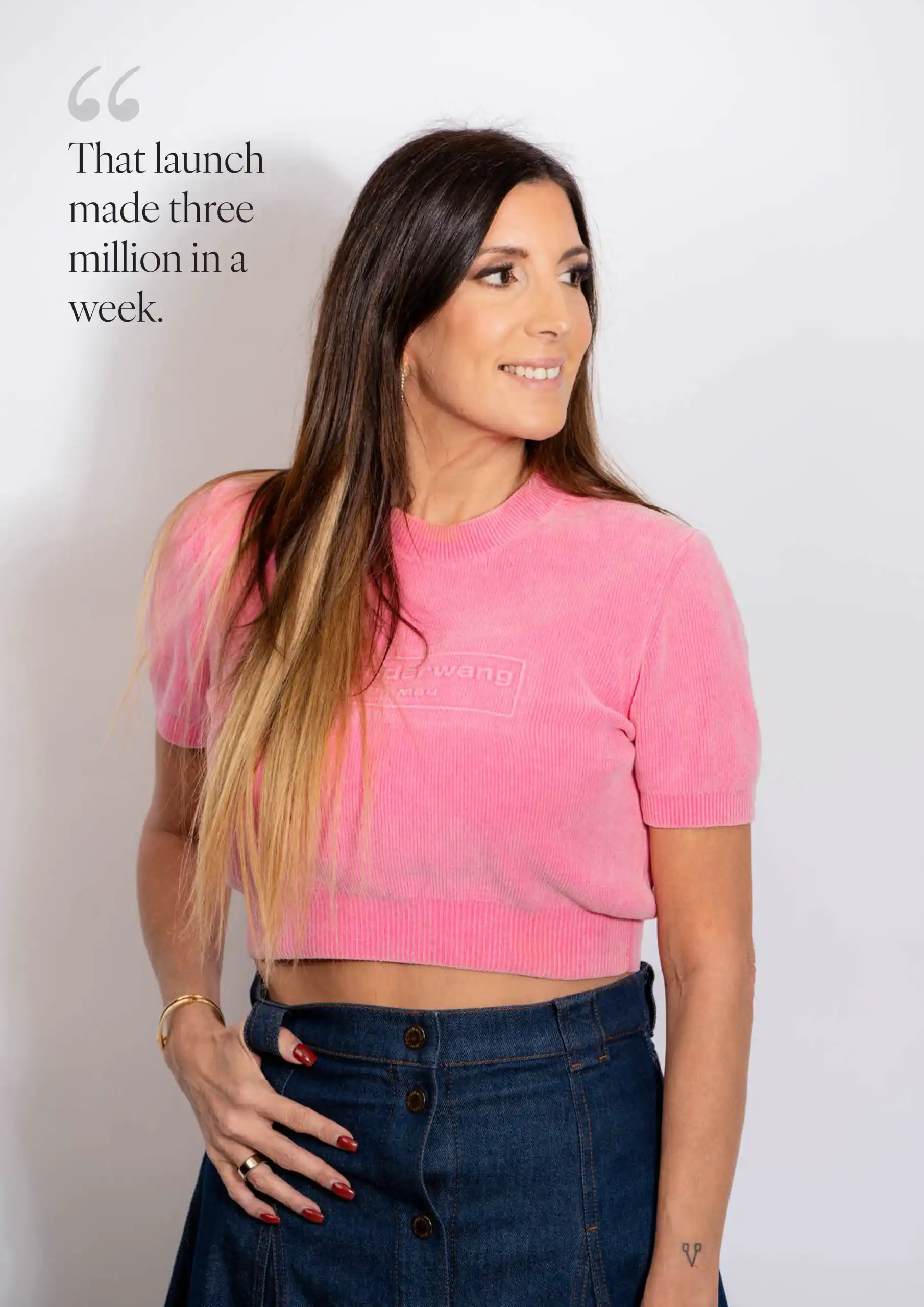
“We were about to launch a course called ‘One to Many’. The year before, it made £350,000 in a week, which blew me away. This time we were going to launch it using other people’s audiences — affiliates — friends who’d taken the course and wanted to tell others, and I wanted to reward them. That launch made three million in a week. We were about to put it out in April, and then lockdown happened. My first thought was: there’s no point. Surely no one’s going to buy anything. Then I thought: I could do it, and if it doesn’t go well, because it’s the first time I’ve done a big affiliate launch, I’ll blame it on COVID. I’ll be like, ‘COVID did it.’ So I did it anyway. I’m delivering this masterclass, telling people: you can work online. Everything you’ve been doing in person, you don’t have to stop. You can still make money — you’ll probably make more money — and I can teach you.”
“And while I’m on the masterclass, Sam, my husband, comes in with my sister and a Post-it note that says: ‘You just made over a million.’ While I’m on the masterclass, I made a million in less than an hour. It was crazy. That launch made three million in a week. That’s when everything changed. People asked me to write books. I had a Sunday Times bestseller, a #1 podcast, and I got to speak around the world to entrepreneurial audiences about how to make money online — and train other people to teach it. We made 20 million in six years.”
“But then things changed again — and this is the part of the story we don’t normally share. It usually stops there because it’s the perfect rags-to-riches story. A friend of mine died in 2023, at the height of everything. At his funeral, people were saying, ‘That was such a life well lived.’ And I sat there thinking, ‘Why?’ He wasn’t married, didn’t have kids, wasn’t rich, didn’t travel the world… and I was like, ‘I think my life is a life well lived — I’m successful.’ So I asked people, ‘What makes you say that?’ And they said: ‘Everyone he comes into contact with leaves happier than before.’ That hit me. Because even though I’d made all this money, I didn’t feel fulfilled. I liked the impact — I’d helped women, I’d helped make millionaires, I’d helped people in council houses change their circumstances, but it wasn’t fulfilling me in the way I thought it would. I tried charity work. I’m an ambassador for a brilliant charity called Bullies Out — I still am. But I decided to do an experiment called ‘A Life Well Lived’. Every week for a year, I’d find someone online who needed help. Sometimes it was money, IVF, someone whose house had been broken into — sometimes it wasn’t. Sometimes it was someone who needed a friend at 3am, or needed one of my courses for free.”

By the end of that year, I’d made more money, because there was somewhere for it to go, and I felt fulfilled. And it changed my business again, because I remembered: this isn’t all about money.
Lolo: When you’re building a business, the hours are intense. You can’t switch off — the kids go to bed, and you’re back on it again. It can feel really overwhelming. And then there’s that moment where the meeting you’ve waited ages for clashes with a nativity play or sports day, and you’re thinking, “Oh God, I can’t not take this meeting… or the London trip”, or whatever it is. For someone who’s in the trenches right now — who’s thinking, ‘Is this ever going to end?’ — what boundaries have you been able to put in place, now you’re a successful entrepreneur with that financial freedom, that have had a real impact on your life as a mum and as a business owner?
Lisa: “My biggest boundary is: when I’m working, I’m working — and when I’m not working, I’m not. That sounds really simple, but we blend it so quickly. We blend our whole lives. I’d have the kids at the park, and I’d have my phone under the table, just answering one last email. And I remember thinking, ‘When I don’t have to do this anymore…’ And sometimes you do have to do that — I had to for the first couple of years. But when I didn’t anymore, I was like, ‘I’m never doing that again.’ So now my boundary is family first, and it always will be from now on. But I’m in a unique position because I’m financially free. When you’re in the trenches, you don’t have that. You can’t always put those boundaries in place. I think it’s about letting yourself off a little bit — not being so harsh on yourself that you can’t always be with the kids and always be good in the business. It’s a blend. You’re juggling. And that’s okay. Let yourself off a bit. But in the future, you can put the boundaries in that you need.”
Lolo: And looking back, when you had that job, you were successful, but juggling kids alongside it would have been impossible. What’s the best bit about being an entrepreneur as a parent?
Lisa: “There are so many good things. One of the best things is being able to control your own time — I get to decide when I work. Another is that I can take them with me on this journey. Finnian has seen me be interviewed at the New York Stock Exchange on the trading floor. They’ve been to amazing places. They’ve seen me on huge stages around the world. They’re seeing a different side to working, and I think that’s really important. They don’t necessarily believe a nine-to-five is the real world — they think this is. And when the kids were younger, when they first went to school, because my husband was the main caregiver, he looked after the home, he did the cooking — they came home after their first day and said, ‘You are never going to believe this… some mums stay at home, and the dads go out to work.’ They had no idea that was the norm, because I’d shown them a completely different way of life. I loved that. They’re seeing things differently — and we can give them that. We can show them they can do whatever they want to do. Surely that’s better than spending one day going to a nativity play. Like, this is more important.”
Lolo: Absolutely — it’s something we talk about a lot in BROOD. Do you think it’s made an impact on your boys’ views of career, and what they might want for the future?
Lisa: “Yeah, definitely. Not necessarily in them knowing exactly what they want to do — or whether they want to run a business — but they’ve seen a lot more than most people see. Their eyes have been opened to different ways of working. And I think what it’s done — something I didn’t have when I was a kid — is make them realise that anything is possible. I would never have believed this kind of stuff was possible, so I wouldn’t have worked towards it. I believed I had to go and get a nine-to-five job. That was the only choice. No one told me about businesses. And yet they’ve seen… they’re friends now with hundreds and hundreds of entrepreneurs — mainly women — so they’ve seen all the different things people can do, and that they can do. The choice is much bigger for them. And because I’ve been able to take them around the world so much — when I’m travelling and working abroad — one of my twins even came on a female empowerment retreat with me to help as my assistant. So they’re seeing all of the things that go on there. I think giving them that is such a better education.”
Lolo: And finally, what’s the one piece of advice you’d give to someone who’s in the trenches right now, looking forward and not able to see the light at the end of the tunnel yet? Especially if things are financially hard.
Lisa: “I’ve got two pieces of advice. First: go and get all the free stuff. There’s free stuff everywhere. I literally teach people to put out free stuff for the people who can’t afford things. For instance, we do a free challenge every year that people make money from — because I needed that, and I didn’t have it. So go and get the free stuff. Second: when it’s really hard, and you’re thinking, ‘God, is this worth it? Maybe I can’t even do this…’ Remember: this is the beginning of your book. It’s the beginning of your TEDx talk. We don’t know it when we’re in it, but it is. And once you’ve grown that business and you’ve been through the hard work, there’s going to be a story to tell — and you’re going to inspire so many other people who are in the trenches. It’s a ripple effect, and you’re part of it.”
Website: www.lisajohnson.com
Instagram: @lisajohnsonstrategist