Overwhelm – anxiety, stress & worry
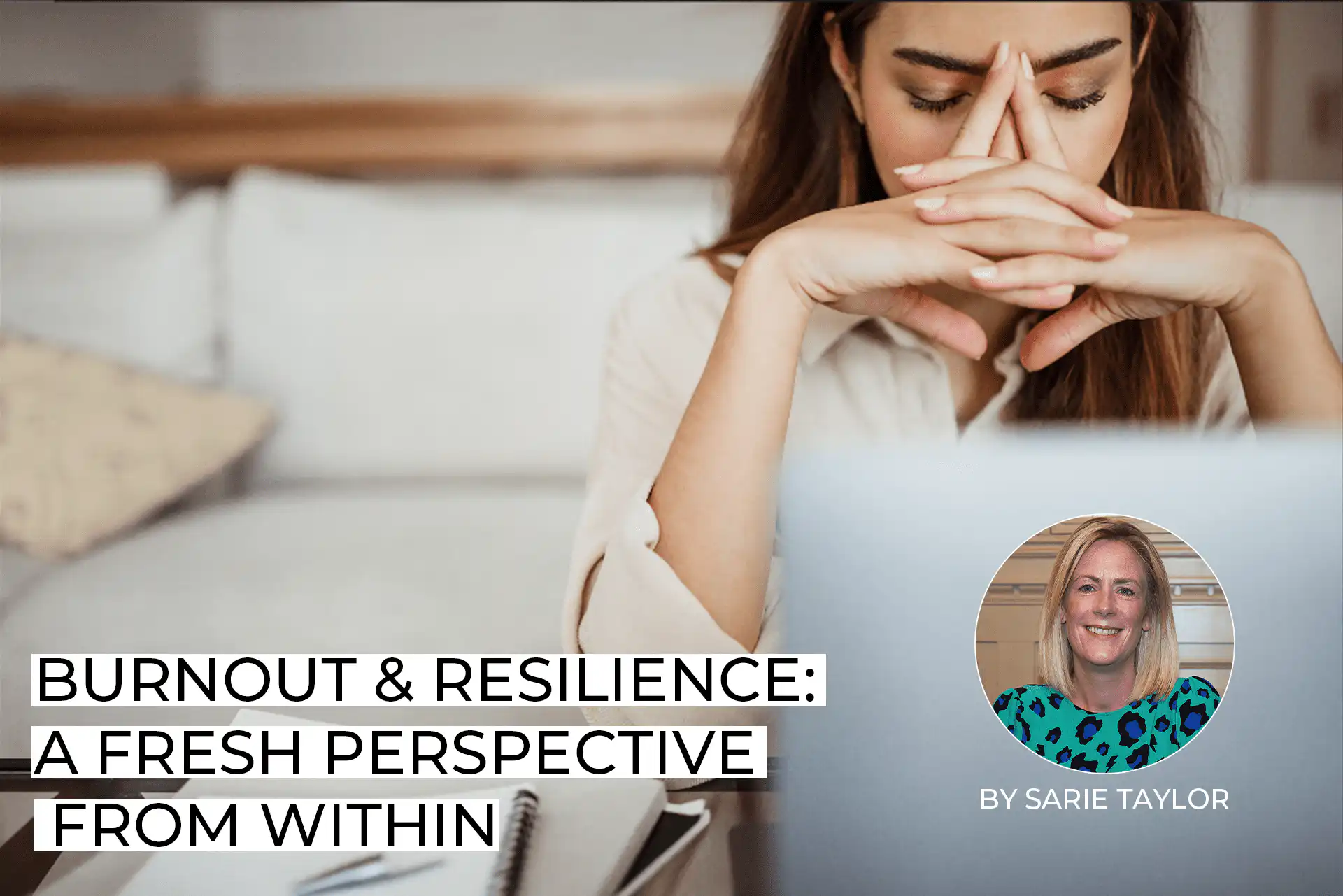
Feeling overwhelmed? Our resident Psychotherapist, Sarie Taylor gives us some tips to reduce our stress and anxiety when juggling work and family life…
Let’s start by looking at what we even mean by overwhelm? Usually we are talking about when we feel like we have too much on our plate! Too much to do, or to think about, and we often get to a place where we feel like one more thing will happen and it will tip us over the edge!
There is often an innocent misunderstanding about overwhelm in that we believe it stems from the challenges we face, the external things in our lives that cause us to get overwhelmed, our work, our family and so on. I really get it, and believed this wholeheartedly myself for many years until I was able to understand more and see things differently. Bare with me whilst I explain!
Life does throw so many challenges our way, as well as opportunities, and at times it can feel never ending as though we are being faced with one thing after the other, and we have no control! Now there is some truth in this in that the majority of things day to day are actually very much out of our control. The issue comes when we find discomfort in what we can’t control, and so we try to control the uncontrollable using the gift of thought, our minds, queue the worry!
Lets just say it was the external stuff that caused the overwhelm directly. We would all have the same levels of overwhelm and stress about the same things and yet we don’t. Something I find stressful may be a breeze for you, and then something you really fear may be an everyday easy occurrence fo me? It’s our response to the challenges we face, our perspective and our thinking about what is happening that creates the overwhelm. Overwhelm comes from the inside out, not outside in!
I would actually go a far to say that the overwhelm is caused 99.9% of the time from the pressure and expectation we put on ourselves, often habitually without even realising, we just get so good at it. Let’s take guilt as an example, parental guilt is talked about a lot. Our feelings always come from our thinking and this includes guilt. Feeling guilty as a parent often involves feeling that you are struggling to be all things to all people and somehow not quite hitting the mark (your expectations). This is not a reflection of your ability as a parent, it does not correlate with whether you are enough, doing a good enough job or getting it ‘right’. It is simply an indication of where your thinking is at…
“I feel bad I haven’t spent much time with me kids”
“I am behind at work because my child has been unwell”
“I feel selfish but I just need a break”
We could go on, and I am sure we could all add hundreds if not thousands of comments and thoughts to this! All of these thoughts create feelings of not quite being enough and then naturally cause us to feel overwhelmed. What if you could change the goal posts yourself? What if you could lower your expectations? Even with all the challenges we face as parents, we can still change the pressure and expectation we put on ourselves. ‘Yes but’ I hear you say! Well you can come up with all the reasons as to why you cant reduce the pressure or expectations, but ultimately if you don’t, your body will slow you down anyway, through feeling burnt out, overwhelmed, catching every cough and cold you come into contact with amongst many other things. It’s our bodies job to slow us down when we don’t take notice. We are humans not robots.
The other aspect to overwhelm, that we don’t always notice, is that we are not often concerned with that present moment, (as we are actually managing and more capable than we give ourselves credit for), but again we are more in our head about what happens next! Let me give you some examples.
‘My child is ill and I feel overwhelmed’ – usually translates to, what if they get worse, what if I am off work for another day, how will I manage (future what ifs)
“I just don’t get a minute to myself” – usually translates to if I carry online this what will happen, when does it end? (Future what ifs)
“I keep getting terrible headaches” – usually translates to what is wrong with me, is this something serious, how will I manage if it is, who will take care of my children? (Future what ifs)
I would love you to reflect on how much of your suffering is really about the here and now, or if it is in actual fact more about the what ifs, the stories we create trying to predict the future and believe we are in control!
How can you start to reduce your overwhelm starting right NOW? Even just picking one will make a difference!
*Treat yourself with compassion NOT criticism
*Adjust your expectations, lower that pressure
*Remember we are only ever doing the best we can given our thinking at the time
*We are enough!
*Ask yourself…would you treat your closest friend or family in the same way you treat or talk to yourself?
*Ask yourself…right in this very second am I OK?
– will it all get too much to handle? (Not sure how you want to start it or how you plan to do the title)
Let’s start by looking at what we even mean by overwhelm? Usually we are talking about when we feel like we have too much on our plate! Too much to do, or to think about, and we often get to a place where we feel like one more thing will happen and it will tip us over the edge!
There is often an innocent misunderstanding about overwhelm in that we believe it stems from the challenges we face, the external things in our lives that cause us to get overwhelmed, our work, our family and so on. I really get it, and believed this wholeheartedly myself for many years until I was able to understand more and see things differently. Bare with me whilst I explain!
Life does throw so many challenges our way, as well as opportunities, and at times it can feel never ending as though we are being faced with one thing after the other, and we have no control! Now there is some truth in this in that the majority of things day to day are actually very much out of our control. The issue comes when we find discomfort in what we can’t control, and so we try to control the uncontrollable using the gift of thought, our minds, queue the worry!
Lets just say it was the external stuff that caused the overwhelm directly. We would all have the same levels of overwhelm and stress about the same things and yet we don’t. Something I find stressful may be a breeze for you, and then something you really fear may be an everyday easy occurrence fo me? It’s our response to the challenges we face, our perspective and our thinking about what is happening that creates the overwhelm. Overwhelm comes from the inside out, not outside in!
I would actually go a far to say that the overwhelm is caused 99.9% of the time from the pressure and expectation we put on ourselves, often habitually without even realising, we just get so good at it. Let’s take guilt as an example, parental guilt is talked about a lot. Our feelings always come from our thinking and this includes guilt. Feeling guilty as a parent often involves feeling that you are struggling to be all things to all people and somehow not quite hitting the mark (your expectations). This is not a reflection of your ability as a parent, it does not correlate with whether you are enough, doing a good enough job or getting it ‘right’. It is simply an indication of where your thinking is at…
“I feel bad I haven’t spent much time with me kids”
“I am behind at work because my child has been unwell”
“I feel selfish but I just need a break”
We could go on, and I am sure we could all add hundreds if not thousands of comments and thoughts to this! All of these thoughts create feelings of not quite being enough and then naturally cause us to feel overwhelmed. What if you could change the goal posts yourself? What if you could lower your expectations? Even with all the challenges we face as parents, we can still change the pressure and expectation we put on ourselves. ‘Yes but’ I hear you say! Well you can come up with all the reasons as to why you cant reduce the pressure or expectations, but ultimately if you don’t, your body will slow you down anyway, through feeling burnt out, overwhelmed, catching every cough and cold you come into contact with amongst many other things. It’s our bodies job to slow us down when we don’t take notice. We are humans not robots.
The other aspect to overwhelm, that we don’t always notice, is that we are not often concerned with that present moment, (as we are actually managing and more capable than we give ourselves credit for), but again we are more in our head about what happens next! Let me give you some examples.
‘My child is ill and I feel overwhelmed’ – usually translates to, what if they get worse, what if I am off work for another day, how will I manage (future what ifs)
“I just don’t get a minute to myself” – usually translates to if I carry online this what will happen, when does it end? (Future what ifs)
“I keep getting terrible headaches” – usually translates to what is wrong with me, is this something serious, how will I manage if it is, who will take care of my children? (Future what ifs)
I would love you to reflect on how much of your suffering is really about the here and now, or if it is in actual fact more about the what ifs, the stories we create trying to predict the future and believe we are in control!
How can you start to reduce your overwhelm starting right NOW? Even just picking one will make a difference!
*Treat yourself with compassion NOT criticism
*Adjust your expectations, lower that pressure
*Remember we are only ever doing the best we can given our thinking at the time
*We are enough!
*Ask yourself…would you treat your closest friend or family in the same way you treat or talk to yourself?
*Ask yourself…right in this very second am I OK?


KEEP UP TO DATE WITH BROOD:
Related Articles
Best Bakuchiol Eye Creams For Fine Lines And Dark Circles
Finding the right bakuchiol eye cream depends on identifying your primary concern—whether it is fine lines, pigmented brown circles, or vascular blue shadows. Bakuchiol is highly effective at softening crepey texture and brightening melanin-driven darkness, but it does not address hollow, structural shadows or blue-toned vascular issues. This guide breaks down how to determine your lead concern, choose a targeted formula, and sequence your routine to achieve results in 8 to 12 weeks
School Holiday Jigsaw: Surviving the Summer Holidays as a Working Parent
School Holiday Jigsaw: Surviving the Summer Holidays as a Working Parent
For school children, the six-week break is a magical expanse of unstructured freedom. For working parents, it marks the beginning of a military-grade logistical operation. Between the skyrocketing costs of summer camps, tag-teaming annual leave with partners, and attempting the ultimate high-wire act of working from home with a laptop on your knee, the math of July and August simply doesn’t add up. We dive deep into the reality of trying to fit a 19th-century agricultural school calendar into a 21st-century digital economy—and explore the progressive workplace shifts needed to save our sanity.
The Cognitive Crutch: Are We Outsourcing Our kid’s Brains to AI?
The Cognitive Crutch: Are We Outsourcing Our Children’s Brains to AI?
Generative AI has transitioned from a novel tech trend to a permanent classroom fixture. But as tools like ChatGPT effortlessly handle the heavy cognitive lifting of writing essays and solving equations, educators and neuroscientists are raising an urgent alarm. True learning is rooted in the cognitive friction of arriving at an answer. By outsourcing that struggle to machines, are we causing intellectual stamina to atrophy, leaving behind a generation of brilliant curators who have lost the ability to think independently? From primary schools to university campuses, the data reveals a stark shift from active learning to passive “cognitive offloading.”