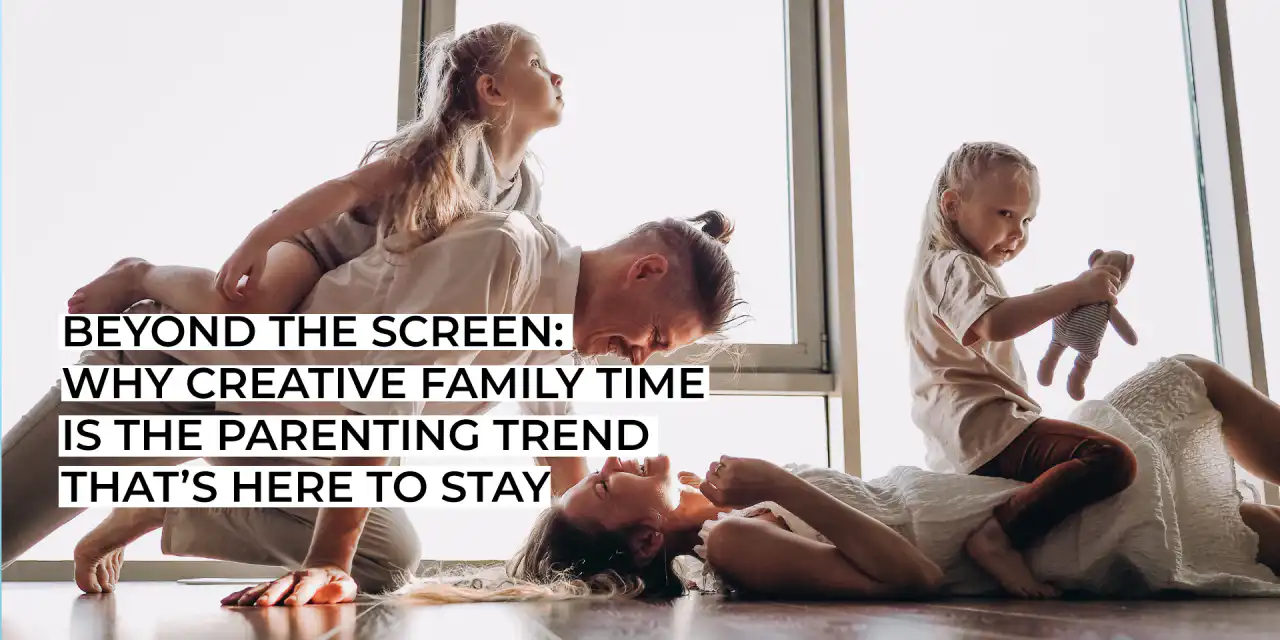
Beyond the Screen: Why Creative Family Time Is the Parenting Trend That’s Here to Stay

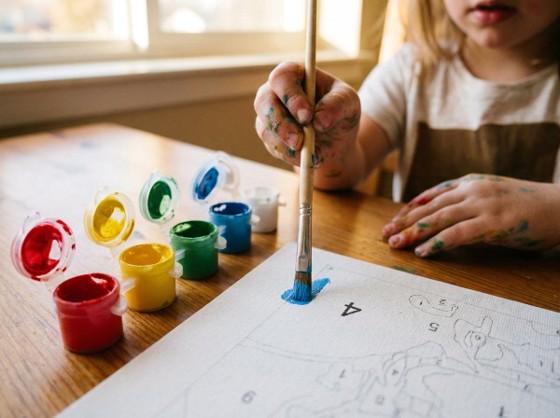
A parent and child paint side by side at a home table in the afternoon light
It is 7pm. The school run is done. The emails are mostly cleared. And there is that familiar pause where somebody reaches for a tablet to keep the kids occupied while you finish dinner.
No judgment here. Screens are survival tools for working parents, and we all use them. But something has been changing in how families think about those evening hours. Pinterest’s 2026 Parenting Trend Report shows searches for “screen free activities” are up 200 per cent, “sensory play ideas” have jumped 1,070 per cent, and “no phone summer” has climbed 340 per cent. Parents are deliberately choosing “screen-smart, experience-rich childhoods,” according to the report.
Call it hobby-maxxing. Call it turning off Netflix and making something with your hands. Either way, more busy families are rediscovering what happens when the screens go dark and the paints come out.
Why Working Parents Are Choosing Screen-Free Activities

Small hands working on a numbered canvas section during a family craft session
The numbers tell a clear story. Across social media and search engines, parents are actively hunting for alternatives to passive entertainment. The “hobby-maxxing” trend – using hands-on hobbies to replace doom-scrolling and binge-watching – has become one of the defining lifestyle moves of 2026. It is not about ditching technology entirely. It is about being intentional with the hours you have.
For many families, the answer is something both adults and children can do together without anyone feeling out of their depth. That is where personalized paint by number kits come in. They require zero artistic training. They work for a six-year-old learning number recognition and a parent unwinding after a long day at the same table. The system is simple: match the numbers on the canvas to the numbered pots of paint, and a picture emerges one block at a time.
It sounds modest, but the effect is genuine. You sit. You focus. You talk. The conversation flows differently when hands are busy and nobody is trying to make eye contact. That is the part you cannot replicate with a tablet.
The Science Behind Making Things Together
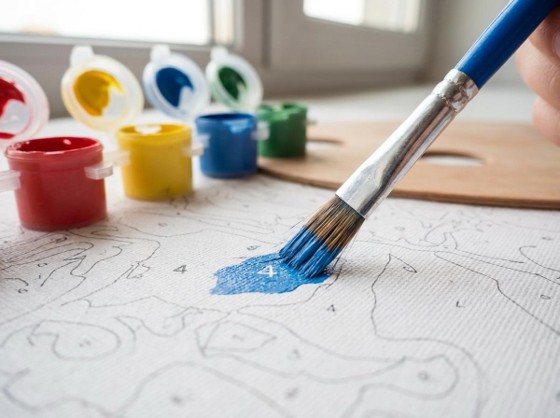
The repetitive, focused motion of painting by numbers creates a calming effect for both children and adults
There is research to back up what many parents notice intuitively. A 2025 study published in Frontiers in Psychology found that parent-child creative activities measurably reduce stress. The Mitsuishi study measured salivary cortisol – the body’s primary stress hormone – in parents and children aged four to five after sessions of joint creative play. Both groups showed significant drops. This was not a subtle effect: the cortisol reduction was large enough to register clearly in both age groups.
Separate research from University of Connecticut’s KIDS program in 2026 found that drawing as a distraction – rather than emotional expression – significantly improved children’s mood after upsetting events. Just five minutes of absorbed drawing was enough to lift their state. The researchers noted that the structured, repetitive nature of the task mattered more than the creative outcome.
This is not about creating little Picassos. It is about what happens neurologically when a child focuses on a simple, repetitive creative task. The numbered sections provide structure. The brushstrokes provide rhythm. The finished section provides a small but real dopamine hit. For children who struggle with emotional regulation, this predictable, low-stakes creative loop can be genuinely grounding.

Why Paint-by-Numbers Works for Busy Families
The practical advantages are hard to beat. Everything arrives in the box: pre-printed canvas, brushes, and numbered paint pots. There is no trip to the art supply shop, no regaining over which colours to buy, no cleanup disaster. According to market research composites cited by the Miami Herald, the global paint-by-numbers market was valued at roughly $1.56 billion in 2024 and is growing at around 7.1 per cent CAGR, driven in part by the surge in personalised and custom kits.
A recent feature in the Miami Herald covering the hobby-maxxing trend notes that adults and families are increasingly choosing analogue activities that offer a sense of completion and pride. Paint-by-numbers delivers this on a timeline that works for real life. A full kit can take anywhere from a weekend to several weeks, depending on complexity. You pick it up. You put it down. There are no save points or loading screens.
For Younger Children
Keep sessions short – fifteen to twenty minutes is plenty for a four- or five-year-old. Look for kits with larger numbered sections and simpler designs. Younger children benefit from the fine motor practice of holding a brush and staying inside the lines. They also get early practice with number matching and colour recognition, all without it feeling like homework.
The confidence boost is real. A child who completes a section of a painting – even a small one – has something concrete to point at and say, “I did that.” That matters more than most parents realise. You cannot get that same feeling from swiping through a screen.
For Older Kids and Teens
Older children can handle more complex designs with finer detail and smaller numbered sections. Custom kits that convert a personal photo into a numbered canvas are especially popular with this age group. They get to paint a beloved pet, a family holiday photo, or their favourite album cover.
The result is genuinely impressive: a piece of wall-worthy art that the teenager created themselves. These finished pieces become proper paintings on canvas that can be framed and displayed just like any store-bought artwork. For a teenager who has not yet found their artistic outlet, completing a photo-realistic painting from a kit can be a real confidence builder.
For parents with multiple children, pairing an older sibling on a complex kit with a younger one on a simpler design means everyone works together at their own pace. It is one of those rare activities that genuinely works across ages without anybody feeling left out.
These kits also slot neatly into school breaks and rainy weekends, offering a focused activity that keeps boredom at bay. BROOD Magazine’s guide to school holiday survival hacks suggests creative projects as a way to keep the day structured without over-planning.
Making Paint-by-Numbers Work for Your Family
Finished paint-by-numbers pieces become personalised home decor and lasting family memories
Set up a permanent creative corner if you have the space. A small table with two chairs, good lighting, and a tray for the paint pots means the kit is always ready. You don’t need to set up and pack away every time, which removes the biggest barrier to starting.
Paint from the top of the canvas downward. This stops your hand from smudging completed sections as you work lower. Keep a damp cloth nearby for accidental brush mixing. And resist the urge to correct how the child is painting. The number-one killer of creative confidence is a parent leaning in to say, “That colour goes there, not there.”
The Arts Council England’s “Space to Breathe” report from May 2025, which consulted over 300 young people aged 16 to 30, found that peer-led creative activities were more effective at supporting mental health than traditional services. The report explicitly called for creative activities to be prescribed by GPs and embedded in NHS mental health strategies. If the UK’s arts funding body and the health service are converging on this idea, there is something worth paying attention to.
Start Small, Display Proudly
Don’t frame everything. Let some pieces live on the fridge. But for the ones that turn out well – and many will – invest in a simple frame. Seeing your work on the wall changes how you value it, and that is true for children and adults alike.
A gallery wall of family paintings becomes a conversation starter when guests visit. It also quietly tells your children that what they make is worth displaying. For busy working parents, BROOD Magazine’s roundup of budget-friendly holiday activities includes more ideas for creative, cost-effective ways to keep everyone engaged.
The Real Gift Is the Time Spent Together
The finished painting matters less than the hours spent making it. The conversations that happen while brushes move. The quiet focus shared across a table. The moment a child looks up and says, “Look, Mum, I finished that bit.”
For working parents juggling careers, school runs, and the endless mental load of running a household, those moments are rare. Paint-by-numbers does not solve everything. But it creates a structure for connection that does not rely on a screen, a subscription, or a trip to a soft-play centre. It is already there, inside a cardboard box, waiting for someone to open it.
That is worth making time for.


From Family Factory Roots to Supermarket Shelves: The Inspiring Rise of Good Bubble
From a family toiletries business to landing in 268 Sainsbury’s stores nationwide, Manchester sisters Amy Lister and Sally Wordsworth share how resilience, skin-kind ingredients, and the Gruffalo helped Good Bubble reach supermarket shelves.

Beyond the Manosphere: Why Boys Need Men Who Speak Up
Dr Carolyne Keenan explores how online manosphere narratives impact young men and explains why positive male role models are essential for shaping a healthy, grounded vision of masculinity

Parenthood Unfiltered: The First Good Dad I Ever Knew
Rachaele Hambleton (Part Time Working Mummy) reflects on growing up without a positive father figure, escaping domestic abuse, and how finding a true partner changed everything for her and her six children. A moving look at presence, healing, and what makes a truly good dad.

Escape the Chaos & The Family Lunch: Food Review
Escape the chaos of the summer holidays and moving boxes with a true taste of Italy. Join us for a family-friendly review of San Carlo Alderley Edge, featuring their fantastic new kids’ menu, authentic Italian dishes, and a stress-free dining experience for parents and children alike.

Beyond “Daddy Daycare”: What Day-One Rights Mean for Working Dads
From day-one flexible working requests to dismantling outdated “daddy daycare” tropes, the UK workplace landscape is shifting. Discover what the new legislation means for working fathers, co-parenting equality, and your career.

Ryan Libbey on the True Meaning of Strength, Parenting & Modern Masculinity
Fatherhood and a traumatic first year reshaped Ryan Libbey’s understanding of true strength, partnership, and modern masculinity. From navigating primary caregiving and supporting his partner Louise through medical trauma to writing “Letters to Leo” and challenging the noisy toxicity of the “Manosphere,” Ryan shares his honest, vulnerable journey on what it really means to show up as a present dad.
Back to School 2026: The Ultimate Kids’ Essentials & Parent Hacks
Back to School Special Back to School 2026: The Ultimate Kids’ Essentials & Parent Hacks From seamless uniform upgrades to smart tech that keeps kids focused and safe, here is our editorial edit for the new school term. Between sorting uniforms, replacing outgrown...
Why Learning a Language as a Busy Parent Is One of the Best Things You Can Do (And How to Actually Make It Happen)
Travel Why Learning a Language as a Busy Parent Is One of the Best Things You Can Do (And How to Actually Make It Happen) No classroom. No fixed timetable. Just you, a real tutor, and a skill that'll stick around for life. When was the last time you did something...

Ibiza Comes to London: Why the Alto x Cotton Beach Club Collab Belongs on Every Parent’s Night-Off List
Ibiza isn’t on the cards for most of us this summer — but that doesn’t mean you can’t get a taste of it. Alto by San Carlo has partnered with the iconic Cotton Beach Club Ibiza for two exclusive evenings on the rooftop of Selfridges, London. Think sun-soaked Mediterranean food, live DJ sets, Champagne and London’s skyline as your backdrop. Two dates only — and honestly? You deserve this one.

Lisa Johnson: From £30K Debt to Multi-Millionaire – How a Mum of Two Built a Freedom-Focused Business
Discover how Lisa Johnson, award-winning entrepreneur and mum of twins, went from £30,000 in debt to building a multi-million-pound business in just seven years. In this exclusive interview, Lisa shares her journey through adversity, her strategies for scaling with passive income, and her honest advice for parents and entrepreneurs seeking financial freedom, work-life balance, and lasting impact. Keywords: Lisa Johnson, entrepreneur, passive income, business strategy, work-life balance, financial freedom, mumpreneur, online business, success story.