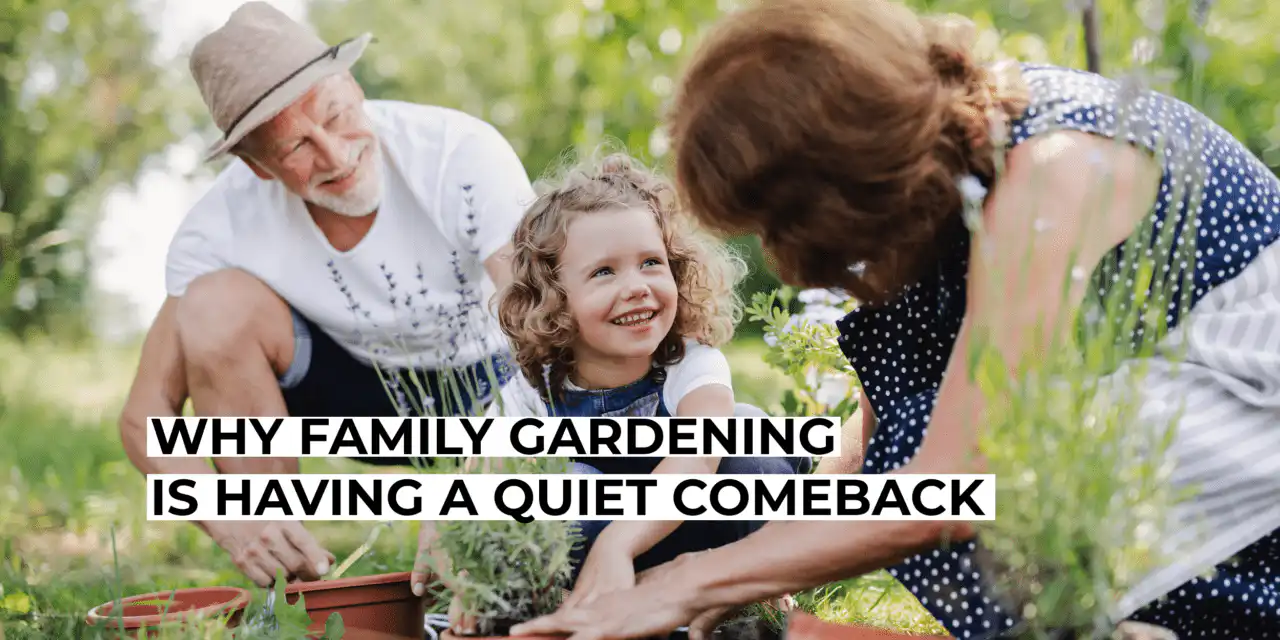
Why Family Gardening Is Having a Quiet Comeback
There’s a noticeable shift happening in how families spend their time. It isn’t loud or trend-led, and it’s rarely documented with before-and-after shots. Instead, it’s quieter and slower, rooted in small routines and shared moments. Family gardening is part of that change. More households are rediscovering the value of growing things together, whether that means tending a few pots on a patio or caring for a modest vegetable patch. For many, starting with a handful of vegetable plants has become a way to reconnect with each other and the rhythms of everyday life.
This renewed interest isn’t about producing perfect harvests or becoming self-sufficient overnight. It’s about slowing down, paying attention and finding meaning in ordinary tasks that bring people together.
A response to busy lives
Modern family life is often shaped by full schedules, competing priorities and constant noise. Screens demand attention, routines feel rushed and shared time can become fragmented. Gardening offers something different. It creates space for pauses, for moments where there’s nothing to do except water, weed or notice what’s changed since yesterday.
These tasks don’t require urgency. They can’t be rushed, and that’s part of their appeal. When families garden together, they step into a pace set by nature rather than notifications. Over time, this slower rhythm can feel grounding, especially for children who are growing up in an increasingly fast-moving world.
Learning without lessons
One of the reasons family gardening feels so natural is that learning happens without instruction. Children observe cause and effect simply by being involved. They see what happens when plants are watered regularly, or when they aren’t. They notice how sunlight, weather and time all play a role.
Adults often find themselves learning too. Gardening encourages curiosity and problem-solving, reminding us that not everything has a fixed outcome. Some things thrive, others don’t, and that uncertainty becomes part of the experience rather than a failure.
This shared learning creates a sense of equality. Parents don’t need to have all the answers, and children feel included in the process rather than guided through it.
Sustainability at a human scale
Conversations around sustainability can feel overwhelming, especially when framed in terms of global impact and long-term consequences. Family gardening brings those ideas closer to home, making them tangible and manageable.
Growing food, even in small amounts, highlights the effort and resources involved. It can shift how families think about waste, seasonality and consumption without needing formal discussion. Harvesting something you’ve grown encourages respect for food in a way that buying it rarely does.
This isn’t about achieving perfection or reducing a carbon footprint overnight. It’s about awareness, and about taking part in systems that feel more transparent and connected.
Shared responsibility and routine
Gardening works best when it becomes part of family life rather than an occasional project. Watering plants, checking growth and harvesting when ready are small responsibilities that can be shared across ages.
These routines offer children a sense of contribution. They’re not just helping; they’re needed. For adults, these shared tasks can become moments of connection that don’t require planning or special effort.
Over time, gardening can anchor days and weeks, offering continuity through changing seasons. That sense of return, of doing the same small things regularly, can be reassuring in an otherwise unpredictable world.
Sponsored Content:


Redefining productivity
There’s something quietly radical about spending time on an activity that doesn’t demand constant output. Gardening challenges the idea that time must always be optimised or productive in conventional ways.
Progress happens slowly and sometimes invisibly. Seeds take time to grow. Plants rest before producing anything tangible. This process encourages patience and acceptance, values that are often sidelined in daily life.
For families, this can be a gentle counterbalance to performance-driven environments. Gardening becomes a place where effort matters more than results, and where showing up regularly is enough.
Making space for togetherness
One of the most meaningful aspects of family gardening is the way it creates opportunities for conversation. Side by side, hands busy, there’s less pressure to fill silence or direct discussion.
Children may talk about their day, ask unexpected questions or simply narrate what they’re doing. These moments feel unforced because they arise naturally from shared activity rather than structured time together.
For parents, gardening can offer insight into how children see the world. What they notice, what excites them and what frustrates them often becomes clear in these quiet settings.
Accessible, not aspirational
Part of gardening’s renewed appeal lies in its accessibility. It doesn’t require expensive equipment, specialist knowledge or large spaces. A few containers can be enough to get started, making it possible for families in different types of homes to take part.
This simplicity removes pressure. Gardening doesn’t have to look a certain way or meet external expectations. It can be messy, inconsistent and imperfect, and still be worthwhile.
In a culture that often promotes curated lifestyles, family gardening offers something refreshingly ordinary.
A return to the everyday
Perhaps what makes this comeback feel so significant is that it isn’t driven by novelty. Gardening has always been there, quietly waiting. What’s changed is how it fits into modern family life.
As more people look for ways to reconnect with each other and the world around them, gardening provides a familiar but renewed pathway. It brings families back to everyday acts of care, attention and patience.
In tending plants together, families aren’t just growing food. They’re cultivating shared experiences, grounding routines and a slower way of being. And in doing so, they’re rediscovering the value of things that don’t shout for attention, but quietly make life feel more whole.
Sponsored Content:




Back to School 2026: The Ultimate Kids’ Essentials & Parent Hacks
Back to School Special Back to School 2026: The Ultimate Kids’ Essentials & Parent Hacks From seamless uniform upgrades to smart tech that keeps kids focused and safe, here is our editorial edit for the new school term. Between sorting uniforms, replacing outgrown...
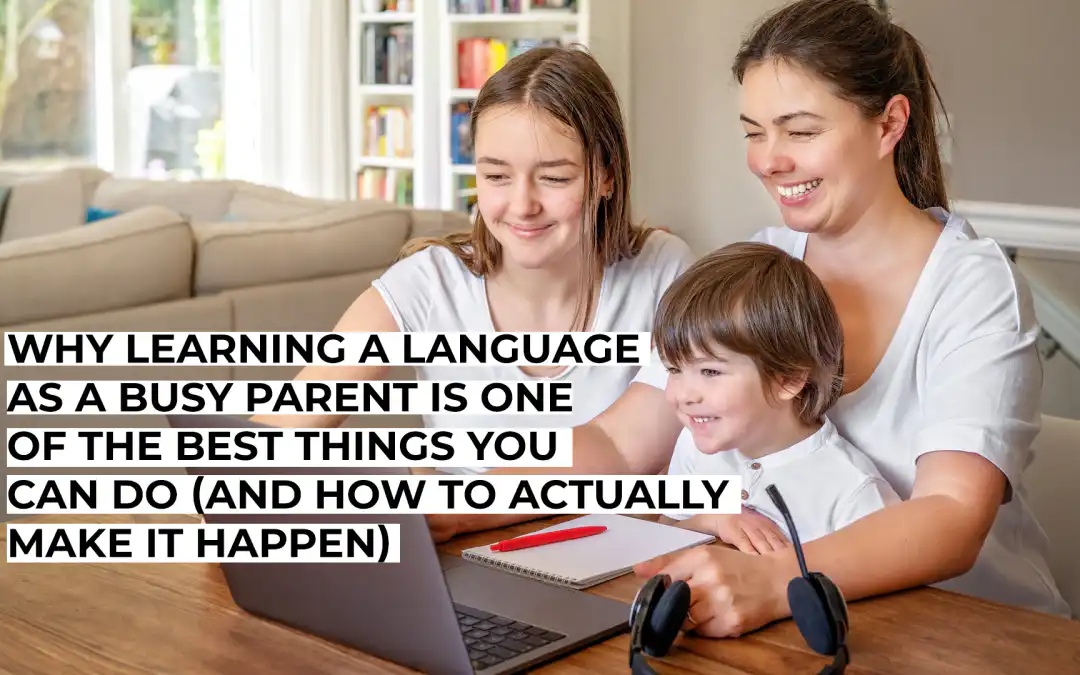
Why Learning a Language as a Busy Parent Is One of the Best Things You Can Do (And How to Actually Make It Happen)
Travel Why Learning a Language as a Busy Parent Is One of the Best Things You Can Do (And How to Actually Make It Happen) No classroom. No fixed timetable. Just you, a real tutor, and a skill that'll stick around for life. When was the last time you did something...

Ibiza Comes to London: Why the Alto x Cotton Beach Club Collab Belongs on Every Parent’s Night-Off List
Ibiza isn’t on the cards for most of us this summer — but that doesn’t mean you can’t get a taste of it. Alto by San Carlo has partnered with the iconic Cotton Beach Club Ibiza for two exclusive evenings on the rooftop of Selfridges, London. Think sun-soaked Mediterranean food, live DJ sets, Champagne and London’s skyline as your backdrop. Two dates only — and honestly? You deserve this one.

Lisa Johnson: From £30K Debt to Multi-Millionaire – How a Mum of Two Built a Freedom-Focused Business
Discover how Lisa Johnson, award-winning entrepreneur and mum of twins, went from £30,000 in debt to building a multi-million-pound business in just seven years. In this exclusive interview, Lisa shares her journey through adversity, her strategies for scaling with passive income, and her honest advice for parents and entrepreneurs seeking financial freedom, work-life balance, and lasting impact. Keywords: Lisa Johnson, entrepreneur, passive income, business strategy, work-life balance, financial freedom, mumpreneur, online business, success story.
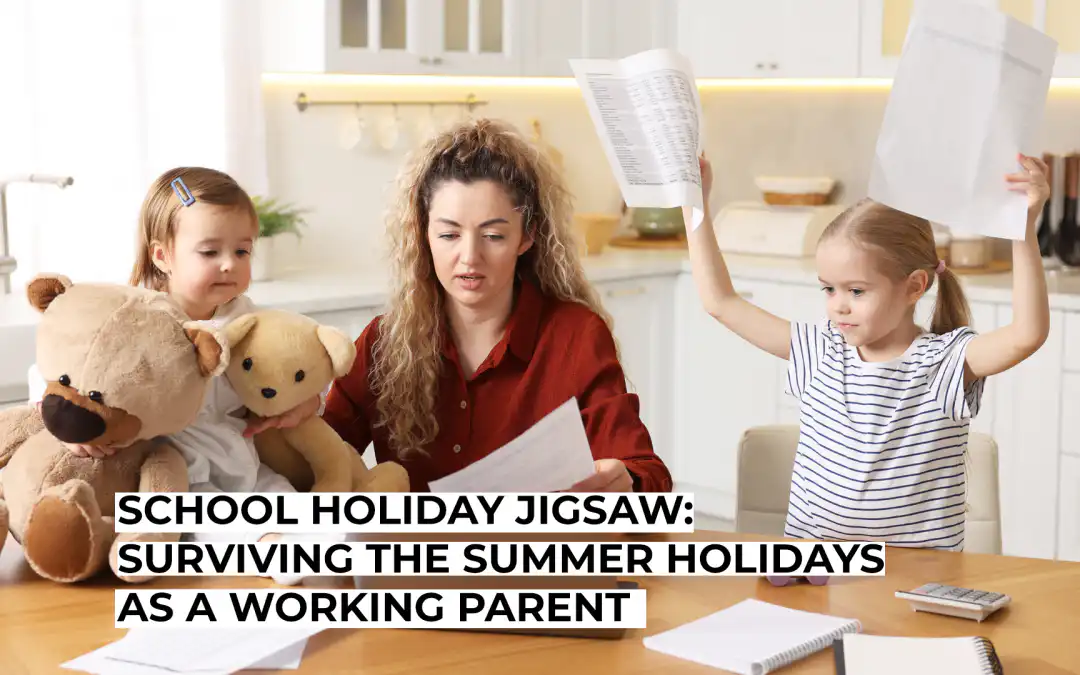
School Holiday Jigsaw: Surviving the Summer Holidays as a Working Parent
School Holiday Jigsaw: Surviving the Summer Holidays as a Working Parent
For school children, the six-week break is a magical expanse of unstructured freedom. For working parents, it marks the beginning of a military-grade logistical operation. Between the skyrocketing costs of summer camps, tag-teaming annual leave with partners, and attempting the ultimate high-wire act of working from home with a laptop on your knee, the math of July and August simply doesn’t add up. We dive deep into the reality of trying to fit a 19th-century agricultural school calendar into a 21st-century digital economy—and explore the progressive workplace shifts needed to save our sanity.

The Cognitive Crutch: Are We Outsourcing Our kid’s Brains to AI?
The Cognitive Crutch: Are We Outsourcing Our Children’s Brains to AI?
Generative AI has transitioned from a novel tech trend to a permanent classroom fixture. But as tools like ChatGPT effortlessly handle the heavy cognitive lifting of writing essays and solving equations, educators and neuroscientists are raising an urgent alarm. True learning is rooted in the cognitive friction of arriving at an answer. By outsourcing that struggle to machines, are we causing intellectual stamina to atrophy, leaving behind a generation of brilliant curators who have lost the ability to think independently? From primary schools to university campuses, the data reveals a stark shift from active learning to passive “cognitive offloading.”

The Big 2026 British Playcation: The Ultimate Free, Low-Cost & Premium Summer Days Out
The six-week school summer holidays are here, but keeping kids entertained shouldn’t break the bank. With new data showing a massive “play gap” across the UK, we’ve rounded up 11 of the absolute best national initiatives, free community festivals, heavily discounted active-play passes, and premium family adventures to help you balance the budget while creating unforgettable summer memories.

Why the UK is Suddenly Going All Out for Graduation Season
Discover why British graduations are becoming massive lifestyle events and explore San Carlo’s new summer menu—the perfect way to celebrate in style.

New ‘xV’ Campaign Launches “The Unspoken Stat” to Expose Hidden Domestic Abuse Spike Around England Matches
A powerful new World Cup campaign introduces “xV” (Expected Violence) to expose a chilling reality: research shows domestic abuse incidents spike by 38% when England loses and 26% even when they win. Backed by survivors, sports figures, and celebrities like Mel B, the campaign demands that this hidden statistic receives the same urgent attention as modern football data.

Banning Social Media Under 16: What the New UK Law Means for Parents
The UK government has announced a landmark social media ban for children under 16. From affected apps to enforcement timelines, here is what the “Australia Plus” model means for busy working parents and family life.