


Why The Kitchen Island Has Become The Heart Of The Modern Family Home
[et_pb_section fb_built=”1″ _builder_version=”4.16″ _module_preset=”default” custom_padding=”||20px|||” global_colors_info=”{}”][et_pb_row _builder_version=”4.16″ _module_preset=”default” custom_padding=”|||14px||” global_colors_info=”{}”][et_pb_column type=”4_4″ _builder_version=”4.16″ _module_preset=”default” global_colors_info=”{}”][et_pb_divider _builder_version=”4.27.4″ _module_preset=”default” global_colors_info=”{}”][/et_pb_divider][et_pb_text _builder_version=”4.27.7″ _module_preset=”default” custom_padding=”9px|24px|7px|23px||” hover_enabled=”0″ global_colors_info=”{}” sticky_enabled=”0″]
Why The Kitchen Island Has Become The Heart Of The Modern Family Home
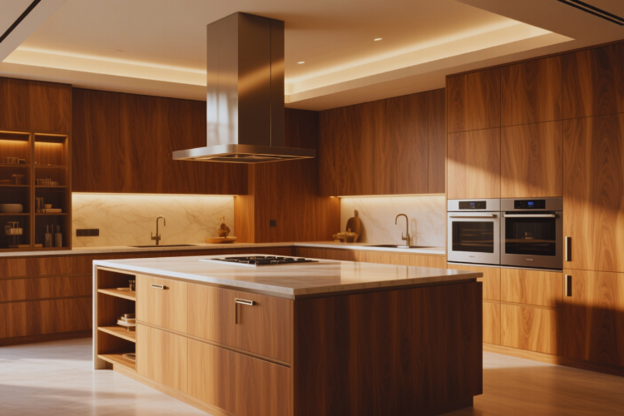
Modern family life is busy, and the way homes are designed has evolved to reflect that reality. Kitchens are no longer rooms used only for preparing meals, especially in households where parents are balancing work, school schedules, childcare, social commitments, and the everyday demands of running a home.
At the center of this shift is the kitchen island. Once considered an optional design feature or an additional countertop, the island has become one of the most hardworking areas of the modern family home, providing a place where cooking, eating, working, socializing, and family life naturally come together.
A Natural Gathering Place For The Family
Families may have fewer opportunities to sit together throughout the day, particularly when parents work different schedules and children have school, sports, clubs, and other commitments. A kitchen island creates an informal gathering point where family members can reconnect without requiring a planned sit-down meal.
Children might talk about their day while a parent prepares dinner, while teenagers can grab a snack and chat before heading to an activity. These small interactions can make the kitchen feel like the social center of the home rather than simply a functional space.
Making Busy Mornings More Manageable
Weekday mornings can be among the most hectic parts of family life. Parents may be preparing breakfast, packing lunches, answering work messages, finding missing school supplies, and getting everyone out the door within a relatively short period.
A well-designed island provides extra space for managing several of these tasks at once. Children can eat breakfast at one end while lunches are prepared at the other, and bags, water bottles, or other essentials can be organized without completely taking over the main kitchen countertops.
Supporting Flexible Family Mealtimes
Traditional dining rooms still have their place, but they are not always practical for every meal. Kitchen islands provide a more relaxed alternative for quick breakfasts, after-school snacks, casual lunches, and simple weeknight dinners.
Adding comfortable seating can make the island particularly useful in homes with changing schedules. Instead of setting the dining table every time someone wants to eat, family members have an accessible place to sit down while remaining connected to whoever is cooking or working nearby.
Creating A More Social Cooking Experience
Older kitchen layouts often separated the person preparing food from everyone else. In contrast, open-plan kitchens with central islands allow cooking to become a more social activity, making it easier for parents to interact with children or guests while preparing meals.
An island can also provide additional preparation space so several people can participate in cooking. Children can help wash vegetables, mix ingredients, or decorate baked goods without crowding the main cooking area, turning everyday meal preparation into an opportunity to spend time together.
Bringing Practical Features Into The Center Of The Room
The island can accommodate far more than additional countertop space. Depending on the layout, it may incorporate a sink, dishwasher, cooktop, electrical outlets, storage drawers, recycling stations, or other features that reduce unnecessary movement around the kitchen.
If a cooktop is positioned on the island, ventilation becomes an important design consideration because there is no wall directly behind the cooking area. Homeowners exploring ventilation options designed specifically for this type of layout can see more here from CopperSmith, where island range hoods are designed to combine practical ventilation with a prominent kitchen feature.
[/et_pb_text][et_pb_image src=”https://broodmagazine.com/wp-content/uploads/2026/08/family-cooking-together-in-kitchen-cheerful-momen-2026-01-09-10-03-25-utc-scaled.webp” alt=”A smiling man cuts vegetables on a wooden board while a woman hugs a child in a bright kitchen, cooking together.” title_text=”Husband chopping tomato while wife hugging son” _builder_version=”4.27.7″ _module_preset=”default” global_colors_info=”{}”][/et_pb_image][et_pb_divider _builder_version=”4.27.4″ _module_preset=”default” global_colors_info=”{}”][/et_pb_divider][et_pb_text _builder_version=”4.27.5″ _module_preset=”default” global_colors_info=”{}”]SPONSORED CONTENT:
[/et_pb_text][et_pb_code _builder_version=”4.27.7″ _module_preset=”default” global_colors_info=”{}”]

Providing Valuable Storage For Family Homes
Storage is one of the biggest challenges in a busy household, particularly as families accumulate cookware, appliances, reusable containers, lunch boxes, and other everyday essentials. A kitchen island offers an opportunity to add significant storage without taking up additional wall space.
Deep drawers can hold pots and pans, while cabinets can accommodate small appliances that would otherwise clutter countertops. Families can also dedicate specific drawers or shelves to children’s items, making it easier for younger family members to access appropriate cups, plates, or snacks independently.
Creating Space For Homework And Home Working
The modern kitchen increasingly needs to support activities that have little to do with cooking. Hybrid and remote working have changed how parents use their homes, while children often complete homework in shared family spaces rather than staying in their bedrooms.
With seating, accessible outlets, and adequate lighting, the kitchen island can become a convenient temporary workspace. Parents can answer emails while keeping an eye on dinner, and children can work on homework nearby when they need assistance, helping families remain connected even when everyone is concentrating on separate tasks.
Helping Open-Plan Spaces Feel More Organized
Open-plan living has become popular because it can make homes feel brighter, larger, and more connected. However, removing walls also creates the challenge of defining different areas without making the space feel fragmented.
A kitchen island provides a natural visual boundary between cooking and living areas while preserving the open feeling of the room. It can establish where the kitchen begins and ends, guide movement through the space, and prevent furniture from feeling randomly arranged across a large open floor plan.
Giving The Kitchen A Strong Visual Focal Point
Because an island occupies a central position, it can play an important role in the overall appearance of the kitchen. Families can use different countertop materials, cabinet finishes, lighting, hardware, or seating to create contrast while still connecting the island with the surrounding design.
Pendant lights above the island can further emphasize its position as the room’s focal point. The result can be a kitchen that feels thoughtfully designed without sacrificing the practical features needed to support everyday family routines.
Adapting As Family Needs Change
One of the greatest advantages of a well-planned kitchen island is its ability to remain useful as family life changes. A countertop used for toddler snacks and craft activities today might become a homework station a few years later and eventually a casual place for teenagers and their friends to gather.
Parents can make the space more adaptable by prioritizing durable materials, generous storage, comfortable seating, and easy-to-clean surfaces. Designing for flexibility rather than one specific stage of family life can help the kitchen continue working effectively for many years.
Encouraging More Time Together At Home
The most successful family spaces are often those that encourage interaction without forcing it. A kitchen island allows several activities to happen simultaneously, meaning one person can prepare food while another works, eats, talks, or helps with a household task nearby.
This flexibility is particularly valuable for working parents who may have limited time together with their children during weekdays. Everyday activities become opportunities for conversation and connection, allowing families to spend more time together without adding another commitment to an already crowded schedule.
The Center Of Modern Family Life
The kitchen island has evolved because the kitchen itself has changed. Rather than serving a single purpose, today’s family kitchen may need to function as a cooking space, dining area, homework station, home office, storage hub, and informal meeting place, sometimes all within the same day.
By bringing these activities together in one central location, the island can make the home more practical while encouraging everyday interaction. For busy modern families, that combination of flexibility, functionality, and connection explains why the kitchen island has become much more than a design trend and increasingly feels like the true heart of the home.
[/et_pb_text][/et_pb_column][/et_pb_row][/et_pb_section][et_pb_section fb_built=”1″ admin_label=”Related Articles” _builder_version=”4.16″ global_colors_info=”{}”][et_pb_row _builder_version=”4.27.4″ _module_preset=”default” global_colors_info=”{}”][et_pb_column type=”4_4″ _builder_version=”4.27.4″ _module_preset=”default” global_colors_info=”{}”][et_pb_divider divider_weight=”5px” _builder_version=”4.27.4″ _module_preset=”default” global_colors_info=”{}”][/et_pb_divider][et_pb_text _builder_version=”4.27.5″ _module_preset=”default” global_colors_info=”{}”]SPONSORED CONTENT:
[/et_pb_text][et_pb_code _builder_version=”4.27.7″ _module_preset=”default” global_colors_info=”{}”]

Links
[/et_pb_text][/et_pb_column][et_pb_column type=”1_2″ _builder_version=”4.16″ global_colors_info=”{}”][et_pb_text _builder_version=”4.16″ header_6_font=”Montserrat|700||on|||||” header_6_line_height=”1.8em” custom_margin=”||10px||false|false” locked=”off” global_colors_info=”{}”]
Follow Us
[/et_pb_text][et_pb_social_media_follow icon_color=”#FFFFFF” _builder_version=”4.27.5″ _module_preset=”default” custom_button=”on” button_font=”Montserrat|||on|||||” text_orientation=”center” custom_margin=”4px|-41px|4px|-41px||” custom_padding=”9px|68px|9px|48px||” global_module=”100570″ saved_tabs=”all” global_colors_info=”{}”][et_pb_social_media_follow_network social_network=”instagram” url=”https://www.instagram.com/broodmagazine” _builder_version=”4.20.2″ _module_preset=”default” background_color=”#ea2c59″ global_colors_info=”{}” follow_button=”off” url_new_window=”on”]instagram[/et_pb_social_media_follow_network][et_pb_social_media_follow_network social_network=”facebook” url=”https://www.facebook.com/broodmagazine” _builder_version=”4.16″ _module_preset=”default” background_color=”#3b5998″ global_colors_info=”{}” follow_button=”off” url_new_window=”on”]facebook[/et_pb_social_media_follow_network][et_pb_social_media_follow_network social_network=”linkedin” url=”http://www.linkedin.com/company/brood-magazine” _builder_version=”4.16″ _module_preset=”default” background_color=”#007bb6″ global_colors_info=”{}” follow_button=”off” url_new_window=”on”]linkedin[/et_pb_social_media_follow_network][et_pb_social_media_follow_network social_network=”twitter” url=”https://www.twitter.com/broodmagazine1″ _builder_version=”4.22.2″ _module_preset=”default” background_color=”#000000″ global_colors_info=”{}” follow_button=”off” url_new_window=”on”]twitter[/et_pb_social_media_follow_network][et_pb_social_media_follow_network social_network=”tiktok” url=”https://www.tiktok.com/@broodmagazine” _builder_version=”4.16″ _module_preset=”default” background_color=”#fe2c55″ global_colors_info=”{}” follow_button=”off” url_new_window=”on”]tiktok[/et_pb_social_media_follow_network][et_pb_social_media_follow_network social_network=”youtube” url=”https://www.youtube.com/channel/UCzLh30eP7Tvcys8O6NG3LDA” _builder_version=”4.16″ _module_preset=”default” background_color=”#a82400″ global_colors_info=”{}” follow_button=”off” url_new_window=”on”]youtube[/et_pb_social_media_follow_network][/et_pb_social_media_follow][/et_pb_column][/et_pb_row][/et_pb_section]