

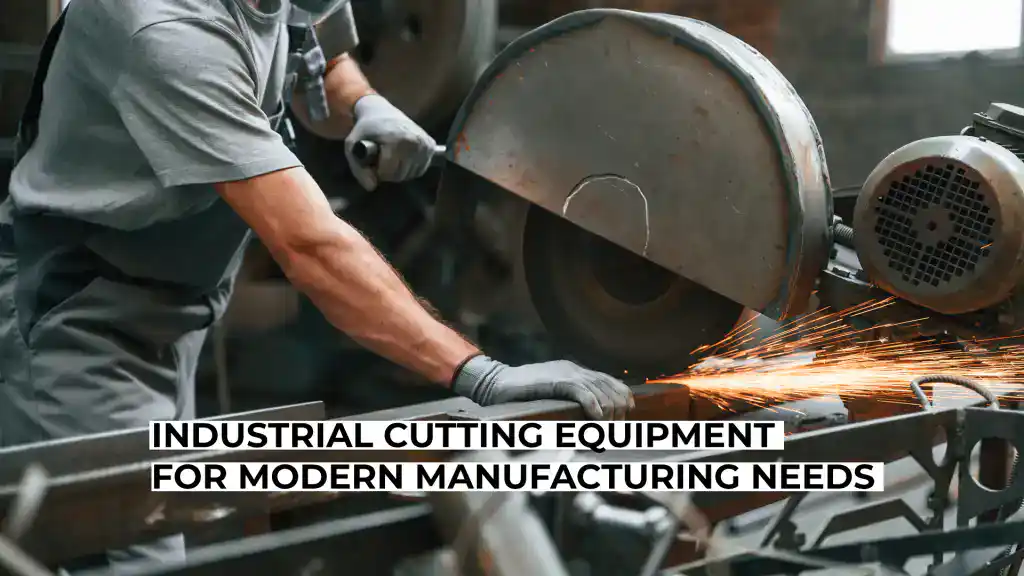
Industrial Cutting Equipment for Modern Manufacturing Needs
[et_pb_section fb_built=”1″ _builder_version=”4.16″ _module_preset=”default” custom_padding=”||20px|||” global_colors_info=”{}”][et_pb_row _builder_version=”4.16″ _module_preset=”default” custom_padding=”|||14px||” global_colors_info=”{}”][et_pb_column type=”4_4″ _builder_version=”4.16″ _module_preset=”default” global_colors_info=”{}”][et_pb_text _builder_version=”4.27.7″ _module_preset=”default” custom_padding=”9px|24px|7px|23px||” hover_enabled=”0″ global_colors_info=”{}” sticky_enabled=”0″]
Industrial Cutting Equipment for Modern Manufacturing Needs
Modern manufacturing depends on tools that are accurate, reliable, and built to handle demanding workloads. Whether a company produces custom metal parts or large-scale industrial products, having the right cutting equipment can improve efficiency and help maintain consistent quality. Today’s plasma cutting systems offer a combination of speed, precision, and ease of use that makes them valuable in an array of industries.
Choosing equipment like the Lincoln Tomahawk can help businesses effectively complete a wide range of cutting jobs. Known for its dependable performance and user-friendly operation, this type of plasma cutter is suitable for fabrication shops, maintenance departments, construction projects, and manufacturing facilities. Selecting equipment that matches a company’s workload can lead to better productivity and more consistent results.
Why Plasma Cutting Is So Popular
Plasma cutting has become a preferred method for working with conductive metals because it offers fast, clean cuts with minimal effort. Compared to many traditional cutting methods, plasma systems can often complete jobs more quickly while reducing the amount of finishing work required. Some of the materials that can be cut with plasma systems are stainless steel, aluminum, copper, and brass. This level of versatility makes plasma cutters useful for businesses that work with a variety of metals.
Features That Improve Productivity
Modern cutting equipment offers features that are designed to help users work more efficiently. Many systems have improved arc stability, easy-to-use controls, and built-in safety features. Some of their additional advantages may include faster setup, portability, more reliable performance, and simpler maintenance requirements. These features can help reduce downtime and help users complete projects more efficiently.
[/et_pb_text][et_pb_divider _builder_version=”4.27.4″ _module_preset=”default” global_colors_info=”{}”][/et_pb_divider][et_pb_text _builder_version=”4.27.5″ _module_preset=”default” global_colors_info=”{}”]SPONSORED CONTENT:
[/et_pb_text][et_pb_code _builder_version=”4.27.5″ _module_preset=”default” global_colors_info=”{}”]


Choosing the Right Equipment for Your Workload
Not every manufacturing environment has the same cutting requirements. A small fabrication shop may prioritize portability and flexibility whereas a larger production facility may need equipment that’s capable of handling continuous operation. When choosing plasma cutting equipment, it is helpful to consider a variety of factors. Those include the thickness of the materials being cut, how often the equipment will be used, available power sources, and the amount of space employees have to work in. Thinking about potential future needs is important as well.
Creating a Safer Workplace
Safe operation is an important part of every manufacturing process. Plasma cutting produces high temperatures, bright arcs, sparks, and metal fumes, so proper safety practices are essential. Operators should wear appropriate personal protective equipment, including eye protection, gloves, protective clothing, and hearing protection when necessary. Good ventilation and routine equipment inspections also help create a safer workplace. Proper training is equally important. When employees understand proper operating procedures, they can work more effectively while helping reduce the risk of accidents.
Maintaining Equipment for Long-Term Performance
Even high-quality cutting equipment performs best when it receives regular maintenance. Routine inspections can identify worn consumables, damaged cables, or other issues before they affect production or safety. Keeping equipment clean, replacing consumable parts when needed, and following the manufacturer’s maintenance recommendations can help extend service life while maintaining consistent cutting quality. Preventive maintenance also reduces the likelihood of unexpected downtime that could delay important projects.
Investing in Reliable Cutting Solutions
As manufacturing continues to evolve, businesses benefit from equipment that delivers dependable performance while adapting to their changing production demands. Modern plasma cutting systems can do just that. They combine precision, efficiency, and durability to support a wide variety of industrial applications.
By selecting equipment that fits their operational needs and maintaining it properly, manufacturers can improve productivity and produce high-quality results. The right equipment can even help them be better prepared for future growth. Reliable cutting technology is an important investment for companies that want to keep their operations running smoothly and efficiently both now and moving forward.
[/et_pb_text][et_pb_divider _builder_version=”4.27.4″ _module_preset=”default” global_colors_info=”{}”][/et_pb_divider][et_pb_text _builder_version=”4.27.5″ _module_preset=”default” global_colors_info=”{}”]SPONSORED CONTENT:
[/et_pb_text][et_pb_code _builder_version=”4.27.5″ _module_preset=”default” global_colors_info=”{}”]


Links
[/et_pb_text][/et_pb_column][et_pb_column type=”1_2″ _builder_version=”4.16″ global_colors_info=”{}”][et_pb_text _builder_version=”4.16″ header_6_font=”Montserrat|700||on|||||” header_6_line_height=”1.8em” custom_margin=”||10px||false|false” locked=”off” global_colors_info=”{}”]
Follow Us
[/et_pb_text][et_pb_social_media_follow icon_color=”#FFFFFF” _builder_version=”4.27.5″ _module_preset=”default” custom_button=”on” button_font=”Montserrat|||on|||||” text_orientation=”center” custom_margin=”4px|-41px|4px|-41px||” custom_padding=”9px|68px|9px|48px||” global_module=”100570″ saved_tabs=”all” global_colors_info=”{}”][et_pb_social_media_follow_network social_network=”instagram” url=”https://www.instagram.com/broodmagazine” _builder_version=”4.20.2″ _module_preset=”default” background_color=”#ea2c59″ global_colors_info=”{}” follow_button=”off” url_new_window=”on”]instagram[/et_pb_social_media_follow_network][et_pb_social_media_follow_network social_network=”facebook” url=”https://www.facebook.com/broodmagazine” _builder_version=”4.16″ _module_preset=”default” background_color=”#3b5998″ global_colors_info=”{}” follow_button=”off” url_new_window=”on”]facebook[/et_pb_social_media_follow_network][et_pb_social_media_follow_network social_network=”linkedin” url=”http://www.linkedin.com/company/brood-magazine” _builder_version=”4.16″ _module_preset=”default” background_color=”#007bb6″ global_colors_info=”{}” follow_button=”off” url_new_window=”on”]linkedin[/et_pb_social_media_follow_network][et_pb_social_media_follow_network social_network=”twitter” url=”https://www.twitter.com/broodmagazine1″ _builder_version=”4.22.2″ _module_preset=”default” background_color=”#000000″ global_colors_info=”{}” follow_button=”off” url_new_window=”on”]twitter[/et_pb_social_media_follow_network][et_pb_social_media_follow_network social_network=”tiktok” url=”https://www.tiktok.com/@broodmagazine” _builder_version=”4.16″ _module_preset=”default” background_color=”#fe2c55″ global_colors_info=”{}” follow_button=”off” url_new_window=”on”]tiktok[/et_pb_social_media_follow_network][et_pb_social_media_follow_network social_network=”youtube” url=”https://www.youtube.com/channel/UCzLh30eP7Tvcys8O6NG3LDA” _builder_version=”4.16″ _module_preset=”default” background_color=”#a82400″ global_colors_info=”{}” follow_button=”off” url_new_window=”on”]youtube[/et_pb_social_media_follow_network][/et_pb_social_media_follow][/et_pb_column][/et_pb_row][/et_pb_section]