

How Workplace Injury Claims Work in Scotland and What Employees Are Entitled to Pursue
[et_pb_section fb_built=”1″ _builder_version=”4.16″ _module_preset=”default” custom_padding=”||20px|||” global_colors_info=”{}”][et_pb_row _builder_version=”4.16″ _module_preset=”default” custom_padding=”|||14px||” global_colors_info=”{}”][et_pb_column type=”4_4″ _builder_version=”4.16″ _module_preset=”default” global_colors_info=”{}”][et_pb_text _builder_version=”4.27.5″ _module_preset=”default” custom_padding=”9px|24px|24px|23px||” hover_enabled=”0″ global_colors_info=”{}” sticky_enabled=”0″]
How Workplace Injury Claims Work in Scotland and What Employees Are Entitled to Pursue
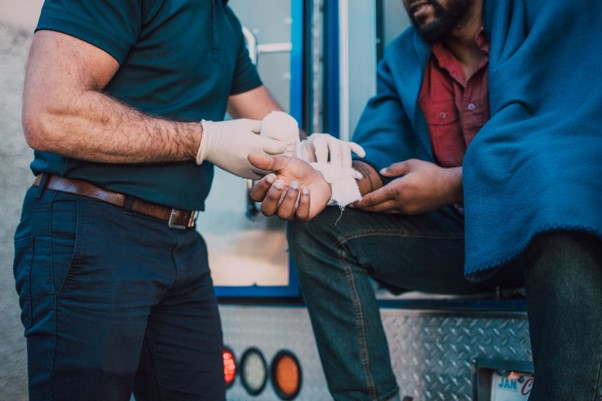
Knee, shoulder, wrist, hip, and hand injuries are among the most common injuries in Scottish workplaces. However, numerous injured workers continue the claims process without knowing what they are entitled to. When a workplace injury claim is built by an experienced and skilled solicitor such as Watermans, the full extent of recoverable loss is considered, as a claim that covers only the immediate costs is unlikely to reflect the true impact of a serious workplace injury.
The Legal Basis for Employer Liability in Scotland
There are two parallel bases of employer liability claims in Scotland. In common law negligence, the claimant must prove that the employer had a duty of care, that the employer breached the duty of care, and that the breach of the duty of care caused the injury. Under health and safety legislation, such as the Management of Health and Safety at Work Regulations and the Workplace (Health, Safety and Welfare) Regulations, employers are subject to certain responsibilities that can lead to civil liability without negligence. A solicitor who has experience in work injury cases evaluates both avenues and does the best possible job of advancing the claim based on the strongest available case.
Establishing That the Employer Breached Their Duty
In a workplace-injury case, a breach of duty is proven by demonstrating the employer’s conduct or lack thereof. The evidence collected during the claims process may uncover breaches, such as inadequate risk assessment, lack of appropriate training, failure to maintain equipment, lack of supervision, and failure to address reported hazards. Accident investigation reports, maintenance records, training records and witness statements from colleagues who knew the working environment all help to paint the picture of the evidence in the liability case.
[/et_pb_text][et_pb_divider _builder_version=”4.27.4″ _module_preset=”default” global_colors_info=”{}”][/et_pb_divider][et_pb_text _builder_version=”4.27.5″ _module_preset=”default” global_colors_info=”{}”]SPONSORED CONTENT:
[/et_pb_text][et_pb_code _builder_version=”4.27.4″ _module_preset=”default” global_colors_info=”{}”]

What Compensation Can Cover Beyond Medical Expenses
Several employees who are injured on the job think that a workplace injury claim is only about getting money back for medical care. The medical expenses head of loss in a workplace claim is often one of the smaller heads of loss in practice. A properly constructed claim covers all recoverable losses, including loss of wages during the recovery period, loss of future wages due to the injury (if it has impacted working capacity or resulted in a change of employment), cost of care and assistance as a result of the injury, and solatium for pain and suffering and loss of amenity. In the case of a serious injury that has long-term employment implications, these heads of loss can combine to generate a compensation amount that is much higher than the actual medical expenses.
The Role of RIDDOR and Accident Reporting
The Reporting of Injuries, Diseases and Dangerous Occurrences Regulations require the reporting of workplace injuries that meet certain criteria. A RIDDOR report will create an official record of the incident and serve as evidence in a future personal injury claim. Employees should ensure that any significant workplace injury is properly recorded in the employer’s accident book at the time of the injury (this is important, as it may cause unnecessary problems later in the claims process if not recorded promptly).
No Win No Fee and What It Means in Practice
Many workplace injury claims in Scotland are handled on a no-win, no-fee basis, which means the claimant’s solicitor won’t charge fees if the claim fails. Before signing the agreement, it is important to be aware of the terms of that agreement, what deductions may be made in relation to any award made and what costs the claimant may be liable for in specific situations. A trustworthy personal injury attorney can clarify the terms of the funding before the claim proceeds.
[/et_pb_text][et_pb_divider _builder_version=”4.27.4″ _module_preset=”default” global_colors_info=”{}”][/et_pb_divider][et_pb_text _builder_version=”4.27.5″ _module_preset=”default” global_colors_info=”{}”]SPONSORED CONTENT:
[/et_pb_text][et_pb_code _builder_version=”4.27.5″ _module_preset=”default” global_colors_info=”{}”]


Links
[/et_pb_text][/et_pb_column][et_pb_column type=”1_2″ _builder_version=”4.16″ global_colors_info=”{}”][et_pb_text _builder_version=”4.16″ header_6_font=”Montserrat|700||on|||||” header_6_line_height=”1.8em” custom_margin=”||10px||false|false” locked=”off” global_colors_info=”{}”]
Follow Us
[/et_pb_text][et_pb_social_media_follow icon_color=”#FFFFFF” _builder_version=”4.27.5″ _module_preset=”default” custom_button=”on” button_font=”Montserrat|||on|||||” text_orientation=”center” custom_margin=”4px|-41px|4px|-41px||” custom_padding=”9px|68px|9px|48px||” global_module=”100570″ saved_tabs=”all” global_colors_info=”{}”][et_pb_social_media_follow_network social_network=”instagram” url=”https://www.instagram.com/broodmagazine” _builder_version=”4.20.2″ _module_preset=”default” background_color=”#ea2c59″ global_colors_info=”{}” follow_button=”off” url_new_window=”on”]instagram[/et_pb_social_media_follow_network][et_pb_social_media_follow_network social_network=”facebook” url=”https://www.facebook.com/broodmagazine” _builder_version=”4.16″ _module_preset=”default” background_color=”#3b5998″ global_colors_info=”{}” follow_button=”off” url_new_window=”on”]facebook[/et_pb_social_media_follow_network][et_pb_social_media_follow_network social_network=”linkedin” url=”http://www.linkedin.com/company/brood-magazine” _builder_version=”4.16″ _module_preset=”default” background_color=”#007bb6″ global_colors_info=”{}” follow_button=”off” url_new_window=”on”]linkedin[/et_pb_social_media_follow_network][et_pb_social_media_follow_network social_network=”twitter” url=”https://www.twitter.com/broodmagazine1″ _builder_version=”4.22.2″ _module_preset=”default” background_color=”#000000″ global_colors_info=”{}” follow_button=”off” url_new_window=”on”]twitter[/et_pb_social_media_follow_network][et_pb_social_media_follow_network social_network=”tiktok” url=”https://www.tiktok.com/@broodmagazine” _builder_version=”4.16″ _module_preset=”default” background_color=”#fe2c55″ global_colors_info=”{}” follow_button=”off” url_new_window=”on”]tiktok[/et_pb_social_media_follow_network][et_pb_social_media_follow_network social_network=”youtube” url=”https://www.youtube.com/channel/UCzLh30eP7Tvcys8O6NG3LDA” _builder_version=”4.16″ _module_preset=”default” background_color=”#a82400″ global_colors_info=”{}” follow_button=”off” url_new_window=”on”]youtube[/et_pb_social_media_follow_network][/et_pb_social_media_follow][/et_pb_column][/et_pb_row][/et_pb_section]