Special Essay / Education & Tech
The Cognitive Crutch
Over the last few years, generative AI tools like ChatGPT have transitioned from novelties to standard classroom fixtures. Students no longer look at a blank screen with anxiety; instead, they feed a prompt into a text box and watch as a polished, five-paragraph essay materialises in seconds. But learning is not merely the act of producing an answer. True learning is rooted in the cognitive struggle of arriving there. By outsourcing that friction, we may inadvertently be short-circuiting the neural development of an entire generation.
The “Shortcut Effect” and Cognitive Atrophy
To understand whether AI is making children “less clever,” we have to look closely at how the brain builds skills. When a student struggles to compose an argument or solve a mathematical proof, they are engaging in what psychologists call “desirable difficulties.” This struggle is what strengthens the brain’s executive functions—the ability to plan, focus attention, remember instructions, and balance multiple tasks successfully.
When AI removes this friction, cognitive atrophy begins. Just as turn-by-turn GPS navigation dramatically worsened the human brain’s natural spatial awareness and internal mapping abilities, text generators risk doing the same to written and analytical thought. If a child never has to navigate the messy middle of an unorganised thought process, they never truly learn how to synthesise complex data or detect nuanced biases.


From Primary to University: A Systemic Shift
While parents naturally worry about foundational primary or high school milestones, recent data indicates that this cognitive reliance is manifesting even more acutely in higher education. According to a landmark College Board Higher-Ed Research Brief surveying over 3,000 university faculty members, an overwhelming 84% of college professors state that generative AI use is actively eroding students’ critical thinking, originality, and deep engagement with course material.
The core issue is a neurological one, often termed “cognitive offloading.” A groundbreaking behavioral experiment conducted by the MIT Media Lab monitored young adults writing analytical essays using EEG neuro-mapping caps. The findings revealed that students using generative AI to write exhibited significantly lower focus, decreased executive control, and poor memory retention. When subsequently required to recreate their arguments without access to the technology, the AI-reliant group consistently struggled to retain or explain their own core concepts because their brains had bypassed the deep processing phase entirely.
What the Statistics Tell Us
The academic landscape across secondary education aligns closely with these university findings. In a widespread National Education Union (NEU) polling initiative, nearly two-thirds of secondary school educators reported a measurable decline in their students’ capacity for independent critical thinking and deep reading stamina, pointing directly to automated tech aids. The trend reveals that without strict boundaries, students default to “executive” shortcuts rather than “instrumental” learning support.
The Classroom Reality: A Dual Threat
Data compiled from educator surveys and behavioral learning trials highlights the core tension of the AI era:
| The Risk (AI as an Executive Crutch) | The Reward (AI as an Instrumental Guide) |
|---|---|
| Skill Erosion: 67% of surveyed secondary teachers notice a sharp drop in writing and independent problem-solving. | Concept Mastery: 82% of students report that using AI as a responsive tutor clarifies complex subjects better than a textbook. |
| Cognitive Passivity: Students use AI to skip the drafting process entirely, undermining long-term retention. | Individualised Pace: Controlled trials show students learn foundational concepts faster when AI acts as an interactive coach. |
The Paradox of the Brilliant Machine
The great paradox of our time is that our children are coming out of school with access to the most advanced intellectual scaffolding in human history, yet they risk leaving school less equipped to think critically without it. They are not inherently less intelligent; their cognitive potential remains identical to generations past. However, their intellectual stamina is being actively compromised.
If we allow generative tools to replace the painful, beautiful process of drafting an original thought, we will raise a generation of brilliant curators who lack the capability to create. They will know how to command an AI to write an essay, but they will not possess the structural logic required to see if the AI’s logic is fundamentally flawed.
The Solution: From Crutch to Coach
So, what is the path forward? Total prohibition is not the answer. Attempting to ban generative AI from a child’s life is as futile as banning calculators in the 1980s or the internet in the 1990s. The technology is here to stay, and our children will enter a workforce that expects them to navigate it seamlessly. Banning it only creates a digital divide and pushes the usage underground, where it is guaranteed to be used as a shortcut.
The solution lies in shifting how our children interact with the machine. We must actively transition them from “executive” use—where the AI generates the final draft—to “instrumental” use, where the AI acts as a relentless, personalised coach. Instead of asking ChatGPT to ‘write an essay on the French Revolution,’ a student should be taught to ask, ‘Critique my argument about the French Revolution and tell me where my logic is weak.’ This keeps the cognitive friction, the messy drafting process, and the ultimate learning authority exactly where it belongs: inside the human brain.
BROOD Reader Opinion Poll
Where do you stand on kids and artificial intelligence? Are we outsourcing their intelligence, or simply evolving with the times?


Back to School 2026: The Ultimate Kids’ Essentials & Parent Hacks
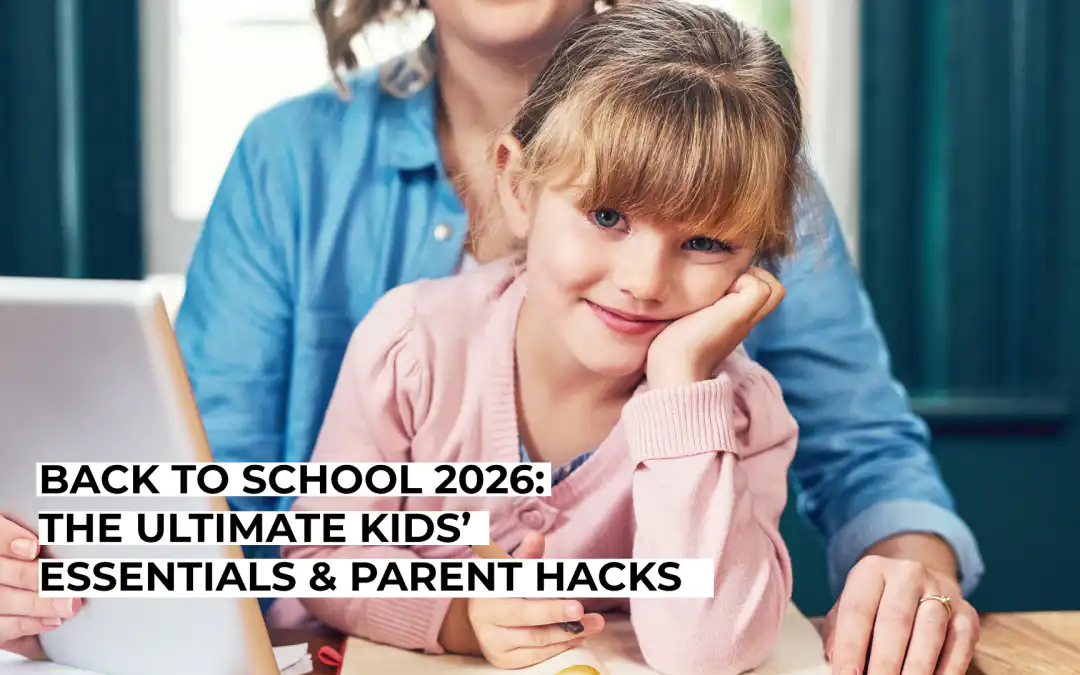
Back to School Special Back to School 2026: The Ultimate Kids’ Essentials & Parent Hacks From seamless uniform upgrades to smart tech that keeps kids focused and safe, here is our editorial edit for the new school term. Between sorting uniforms, replacing outgrown...
Why Learning a Language as a Busy Parent Is One of the Best Things You Can Do (And How to Actually Make It Happen)
Travel Why Learning a Language as a Busy Parent Is One of the Best Things You Can Do (And How to Actually Make It Happen) No classroom. No fixed timetable. Just you, a real tutor, and a skill that'll stick around for life. When was the last time you did something...

Ibiza Comes to London: Why the Alto x Cotton Beach Club Collab Belongs on Every Parent’s Night-Off List
Ibiza isn’t on the cards for most of us this summer — but that doesn’t mean you can’t get a taste of it. Alto by San Carlo has partnered with the iconic Cotton Beach Club Ibiza for two exclusive evenings on the rooftop of Selfridges, London. Think sun-soaked Mediterranean food, live DJ sets, Champagne and London’s skyline as your backdrop. Two dates only — and honestly? You deserve this one.

Lisa Johnson: From £30K Debt to Multi-Millionaire – How a Mum of Two Built a Freedom-Focused Business
Discover how Lisa Johnson, award-winning entrepreneur and mum of twins, went from £30,000 in debt to building a multi-million-pound business in just seven years. In this exclusive interview, Lisa shares her journey through adversity, her strategies for scaling with passive income, and her honest advice for parents and entrepreneurs seeking financial freedom, work-life balance, and lasting impact. Keywords: Lisa Johnson, entrepreneur, passive income, business strategy, work-life balance, financial freedom, mumpreneur, online business, success story.
School Holiday Jigsaw: Surviving the Summer Holidays as a Working Parent
School Holiday Jigsaw: Surviving the Summer Holidays as a Working Parent
For school children, the six-week break is a magical expanse of unstructured freedom. For working parents, it marks the beginning of a military-grade logistical operation. Between the skyrocketing costs of summer camps, tag-teaming annual leave with partners, and attempting the ultimate high-wire act of working from home with a laptop on your knee, the math of July and August simply doesn’t add up. We dive deep into the reality of trying to fit a 19th-century agricultural school calendar into a 21st-century digital economy—and explore the progressive workplace shifts needed to save our sanity.

The Big 2026 British Playcation: The Ultimate Free, Low-Cost & Premium Summer Days Out
The six-week school summer holidays are here, but keeping kids entertained shouldn’t break the bank. With new data showing a massive “play gap” across the UK, we’ve rounded up 11 of the absolute best national initiatives, free community festivals, heavily discounted active-play passes, and premium family adventures to help you balance the budget while creating unforgettable summer memories.

Why the UK is Suddenly Going All Out for Graduation Season
Discover why British graduations are becoming massive lifestyle events and explore San Carlo’s new summer menu—the perfect way to celebrate in style.
New ‘xV’ Campaign Launches “The Unspoken Stat” to Expose Hidden Domestic Abuse Spike Around England Matches
A powerful new World Cup campaign introduces “xV” (Expected Violence) to expose a chilling reality: research shows domestic abuse incidents spike by 38% when England loses and 26% even when they win. Backed by survivors, sports figures, and celebrities like Mel B, the campaign demands that this hidden statistic receives the same urgent attention as modern football data.

Banning Social Media Under 16: What the New UK Law Means for Parents
The UK government has announced a landmark social media ban for children under 16. From affected apps to enforcement timelines, here is what the “Australia Plus” model means for busy working parents and family life.

Beat The Heat: Top Tips To Help Your Kids Sleep During A Heatwave
Struggling to get your little ones to sleep in a stifling bedroom? From clever daytime blackout tactics and safe on-the-go shading with SnoozeShade, to expert routine adjustments from pediatric sleep specialist Amanda Marks and soothing audio tracks from Bedtime Story Co, we’ve got your ultimate guide to keeping kids cool, calm, and safely asleep during a summer scorcher.