

Chesterfield Chairs for Family Homes: Creating a Reading Corner That Works
In a busy family home, the living room often has several jobs: play space, somewhere to catch up after work and the place where everyone gathers in the evening. A reading corner does not need a spare room. It needs a seat that suits its user, enough light and a position that works around everyday family life.
Chesterfield chairs bring buttoned upholstery and a strong outline to that arrangement. The useful question is which shape will fit the corner and how it will be used. A generous armchair can look inviting in a photograph yet leave too little space to open a cupboard or walk past it.

Give the corner a real job
Picture an ordinary weekday before choosing furniture. Will you read there after the children are in bed, sit beside a child reading aloud, or use it for a few quiet minutes between work and supper? Those routines call for different arrangements. Reading together may work better on a sofa; one armchair is not automatically a comfortable seat for two.
When browsing Chesterfield chairs from Designer Sofas 4U, compare the individual styles rather than treating the collection as one standard shape. The category includes club, wingback and tub chairs, alongside other designs. A high-backed chair changes the outline of a room differently from a lower, curved tub chair. Neither is the right choice until you have checked the fit.
For a working parent, the corner can simply be somewhere to put a book and sit down. It does not have to double as a home office. If it will be used for regular desk work, choose seating for that task separately.
Measure the usable space, not just the empty corner
Start with the overall width and depth of the exact chair, then mark its footprint on the floor with masking tape. Include a side table, lamp and footstool if you intend to use them. Open nearby doors and drawers fully. Walk through the room with the tape in place, including along the route people use when carrying bags or laundry.
Measure the delivery route too: the narrowest doorway, hall turns, stairs and any lift. Ask which dimensions apply to delivery and whether any parts can be removed. A chair fitting beside the window does not establish that it can reach that window.
There is no useful universal clearance figure for every household. The room layout, door swings and the people using the space matter. Keep the usual routes usable rather than planning around a chair that must be moved every morning.

Look at the shape as well as the colour
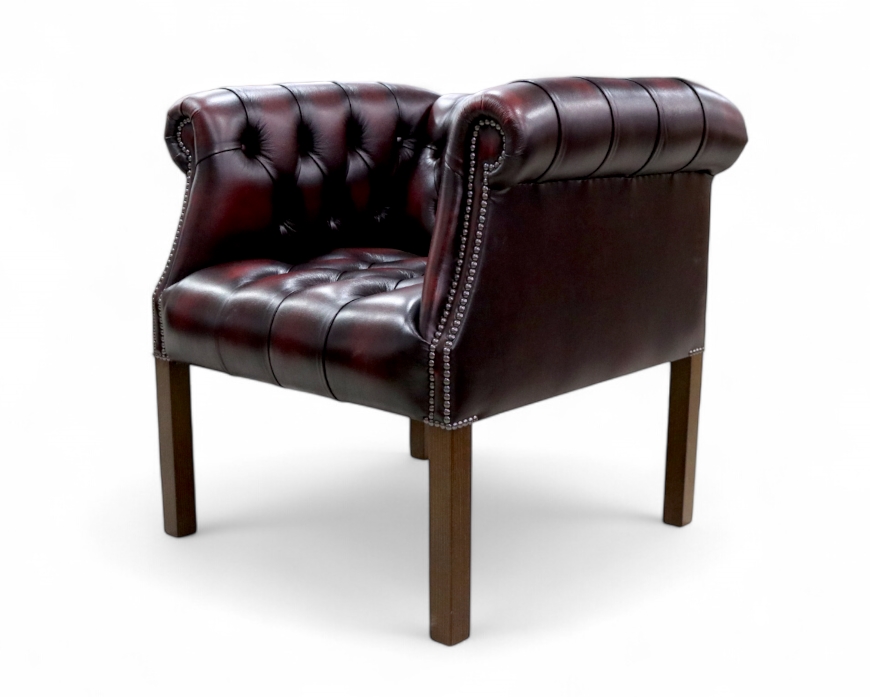
The Devon Chesterfield tub chair in Antique Oxblood provides a concrete styling example. Its product listing describes a buttoned seat and exposed hardwood legs. The photographs show a curved back and arms, deep red-brown upholstery and traditional stud detailing. Those features can provide a focal point beside simpler furniture.
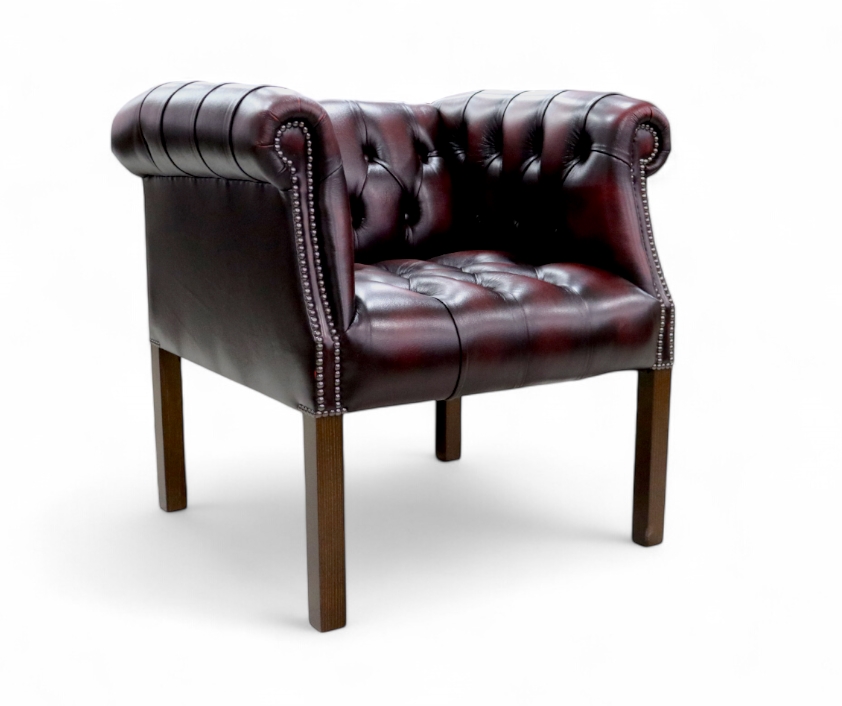
Use product photography to judge the outline and detailing, then confirm measurements with the retailer. Seat height, usable seat depth and the distance between the arms are particularly helpful. Overall dimensions alone cannot tell you whether your feet will rest comfortably or whether the chair will suit the way you sit with a book.
An oxblood chair need not come with a matching room. Try it against your existing rug, curtains and wall colour before buying more furniture. A restrained backdrop can leave the chair’s shape visible; a room already full of strong patterns may need a quieter combination.
Try the seat for the way you read
If you can visit a showroom, sit in the chair with a book for more than a quick photograph. Notice whether the seat depth suits you, where your arms rest and whether you can change position easily. A low tub chair and a wingback may both appeal visually while feeling quite different in use.
If visiting is impractical, request the missing measurements and ask specific questions about the seat construction and upholstery. Check the current returns arrangements for the exact order, especially where options are customised. Neither the Chesterfield name nor a photograph establishes comfort for a particular person.

Put light and a small surface within reach
Daylight can make a window-side position attractive, but check the corner in the evening too. Place a reading light so that the page is illuminated without a bright bulb shining into your eyes. Try it from the actual sitting position before settling on its location.
A stable side table gives a book, glasses or drink somewhere to go. Keep it reachable without an awkward stretch. In a room shared with children, consider the stability of the lamp and table, and route cables away from walking and play areas. Follow the manufacturers’ instructions for any fixing or installation.
Choose the upholstery for your household
Ask for a swatch and look at it in the room during the day and under your usual lighting. The word ‘leather’ alone does not establish the finish, cleaning method or resistance to marks. Check the upholstery specification and care instructions for the named chair rather than assuming all models in a category are identical.
Avoid treating any armchair as automatically child-proof, pet-proof or maintenance-free. Choose with the people who use the room in mind, and keep the appropriate care guidance somewhere you can find it.
Make room for the things that will live there
A small basket or shelf can hold current reading without turning the chair into another storage surface. If the space is shared, decide where toys, school bags and work equipment will go. Keeping the seat available is more useful than adding accessories that fill it.
Before ordering, check the chair measurements, delivery access, upholstery details and purchase terms together. A successful reading corner earns its place through ordinary use: the chair suits the person, the light reaches the page and everyone can still move comfortably around the room.