Mother’s Day Gifts: Why Thoughtfulness Matters More Than Formula
Mother’s Day has a way of arriving in the middle of everything else.
Just as work gets busier and family calendars fill up and the mental load seems to double, there it is: another date that matters, another occasion that carries emotion, expectation, and, sometimes, pressure too.
For many families, the default response is familiar. Buy flowers. Find a card. Add chocolates. Sort something quickly and hope it feels enough. (For our Australian readers, you can find Sydney’s leading florist)
But for most mums, what matters is not always how polished the gift looks from the outside. It is whether it feels genuine.

That is the message behind a recent Mother’s Day survey organised by MYPICTURE, which explored what makes a gift actually feel meaningful. Drawing on responses from its audience, parenting blog communities and Instagram polls, the survey offers a useful snapshot of what mums in the UK value most when Mother’s Day comes around.
And the strongest result is this: thoughtfulness matters more than formula.
It is not just about whether a gift is personalised
Personalised gifts are often treated as the obvious Mother’s Day answer. Add a photo, a message or a name, and the job is done.
But the survey suggests it is not quite that simple.
When asked about overall gift preference, 36% of respondents said they were open to either a personalised or non-personalised gift. Meanwhile, 25% preferred a thoughtful non-personalised gift, and 25% actively preferred a personalised one. Only 13% said they would rather receive an experience or practical help instead.
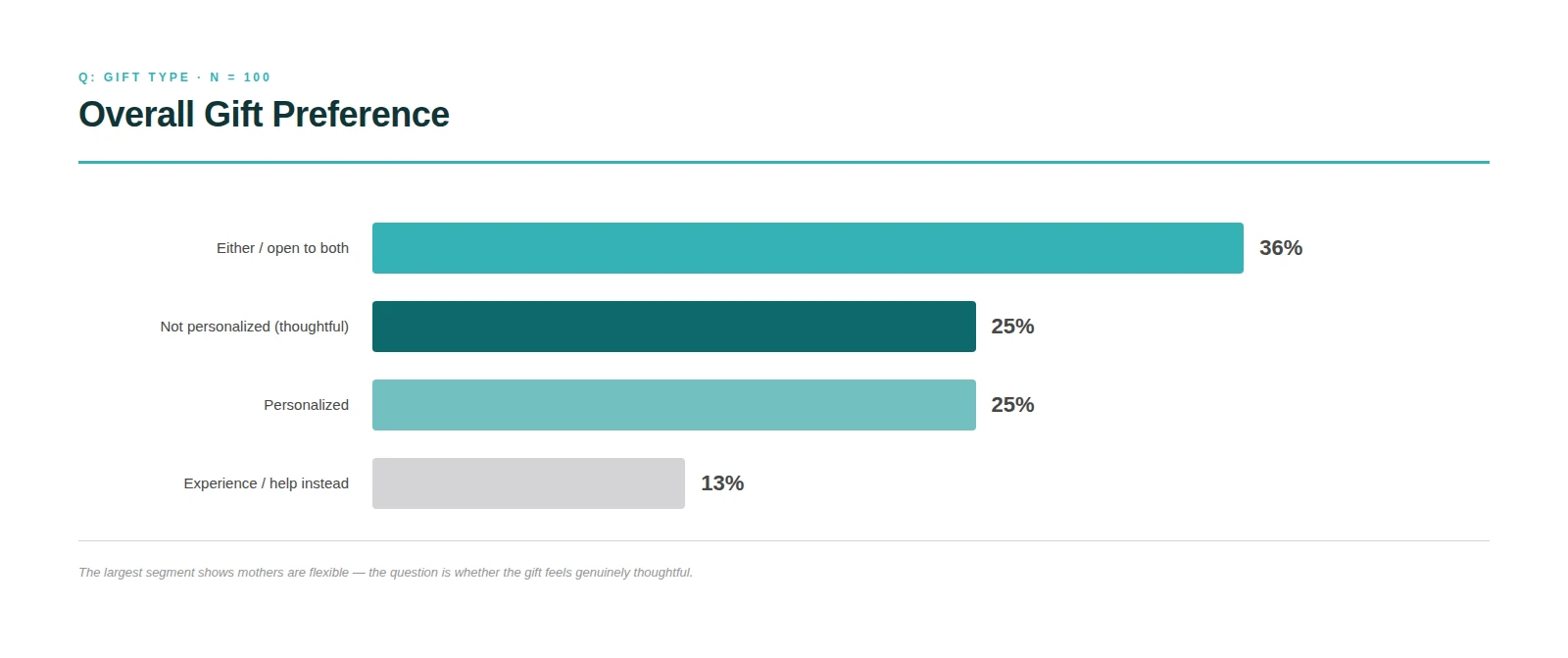
That does not suggest mums are rejecting personalisation. Far from it. But it does suggest that personalisation on its own is not the whole story.
What seems to matter more is whether a gift feels considered.
For working families, that distinction feels especially relevant. In homes where life moves quickly and so much of the daily effort goes unnoticed, a present that reflects care and attention can mean far more than something chosen simply because it fits the occasion.
The biggest signal of care is effort
The clearest finding in the survey was about what makes a gift feel thoughtful.
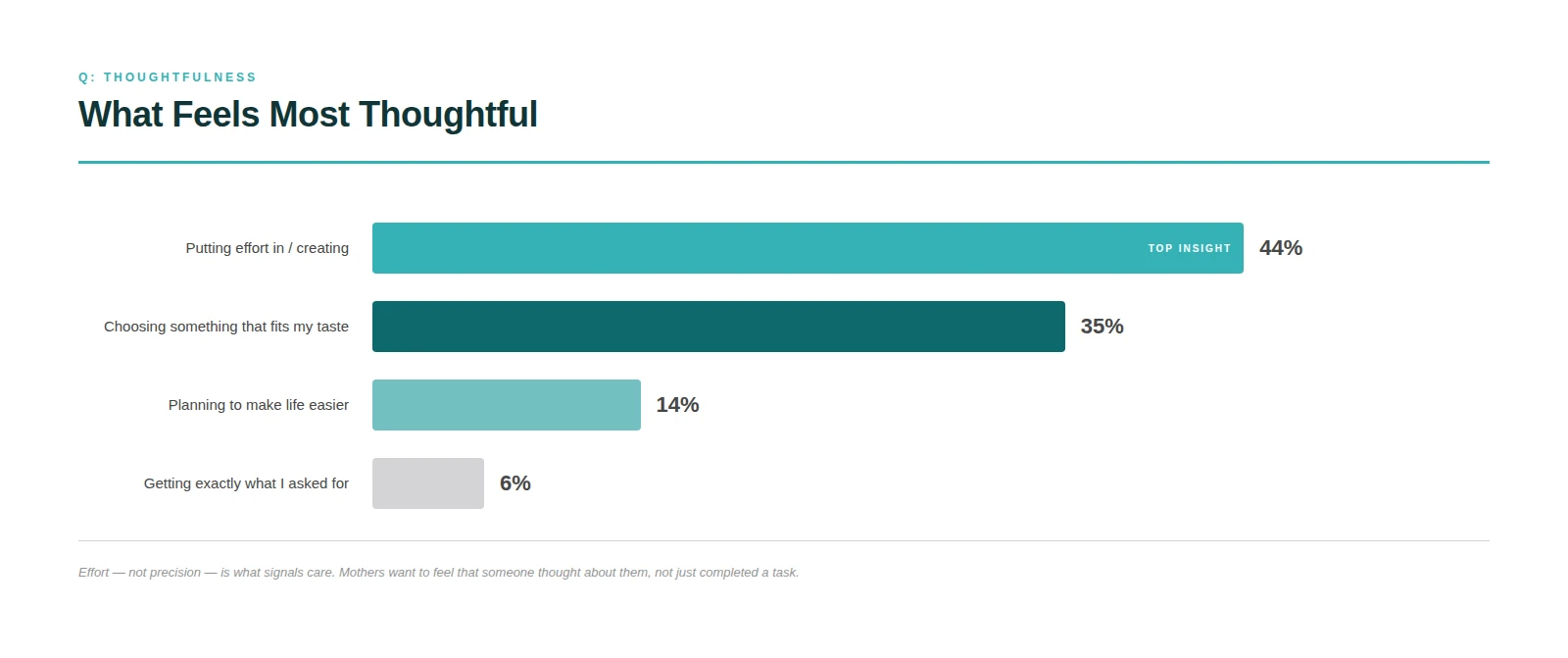
Asked what matters most, 44% of respondents said the most thoughtful thing about gifts for mum is the effort put into creating something. That ranked above choosing something that fits their taste at 35%, planning to make life easier at 14%, and getting exactly what they asked for at 6%.
There is something reassuring in that result.
It suggests that mums are not mainly judging gifts by price, polish or whether someone guessed perfectly. They are looking for signs that somebody stopped, thought and made a real effort.
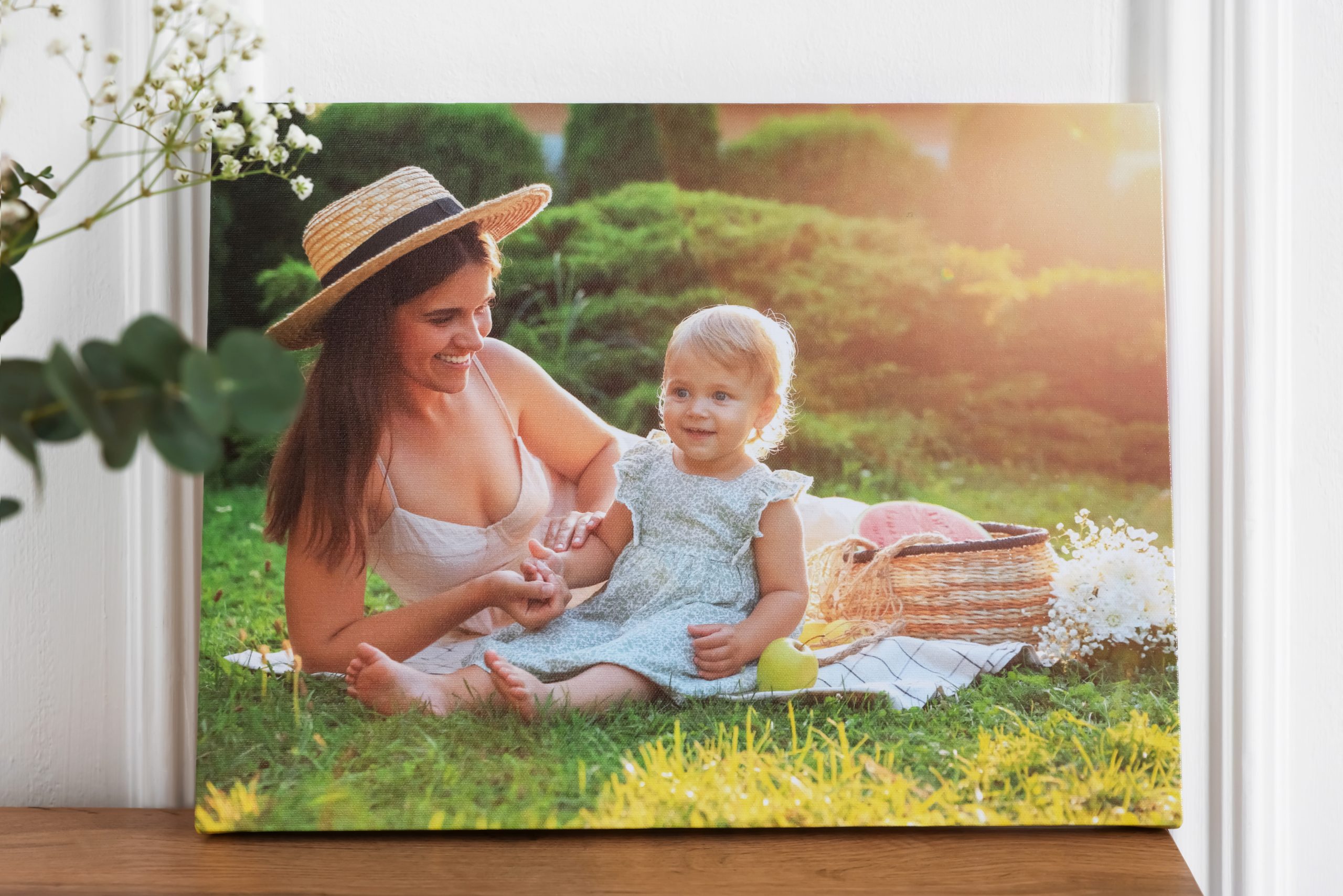
That effort can take different forms. It might be printing a photo gift that genuinely means something. It might be writing a message that says more than the usual line in a shop-bought card. It might be picking something small but specific because it reflects who she is, not just what the calendar says.
For busy parents, that matters. Thoughtfulness does not have to mean expensive or elaborate. Often, it simply means intentional.
The most meaningful gifts help tell a story
The survey also explored what kind of personalisation mums actually prefer.
Here, one result stood out clearly: 53% of respondents said they preferred gifts that combine a photo and a message. Photos alone followed at 33%. By contrast, just 9% preferred names, initials or message-only personalisation, while 5% said they do not like personalised gifts at all.
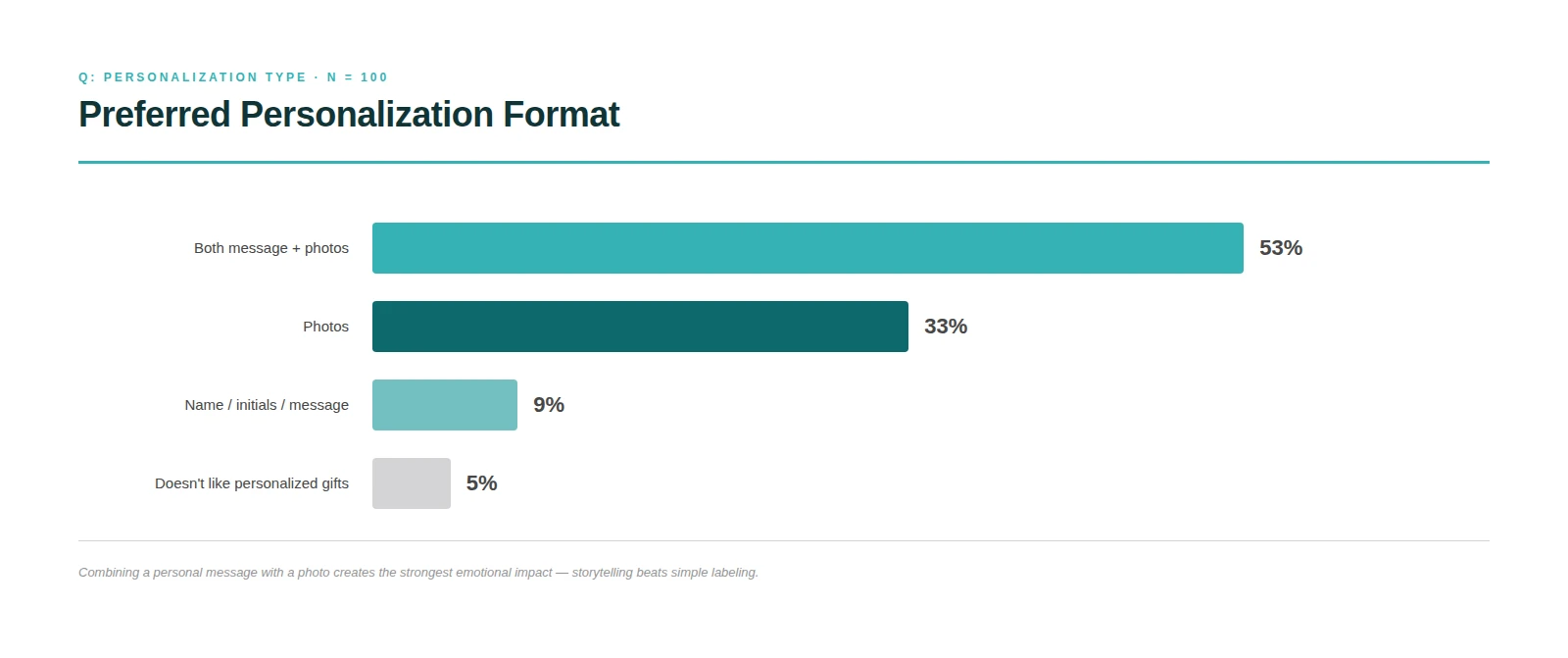
That points to an important difference.
A name on a gift means ownership. A photo and a message mean a relationship.
That may be why this kind of gifting continues to resonate. It is not just about adding a custom detail. It is about reflecting a memory, marking a family moment or capturing something that might otherwise get lost in the speed of everyday life.
For working parents, that emotional layer matters. Family life often moves so quickly that special moments pass before anyone has properly paused to notice them. A gift that brings one of those moments back into focus can feel especially meaningful.
Special still matters
Another interesting finding from the survey was around gift style.
The top choice, selected by 35% of respondents, was something special or indulgent. Close behind, 34% preferred a blend of practical and special. Purely practical and reusable gifts came in at 18%, while decorative or keepsake-led gifts were chosen by 12%.
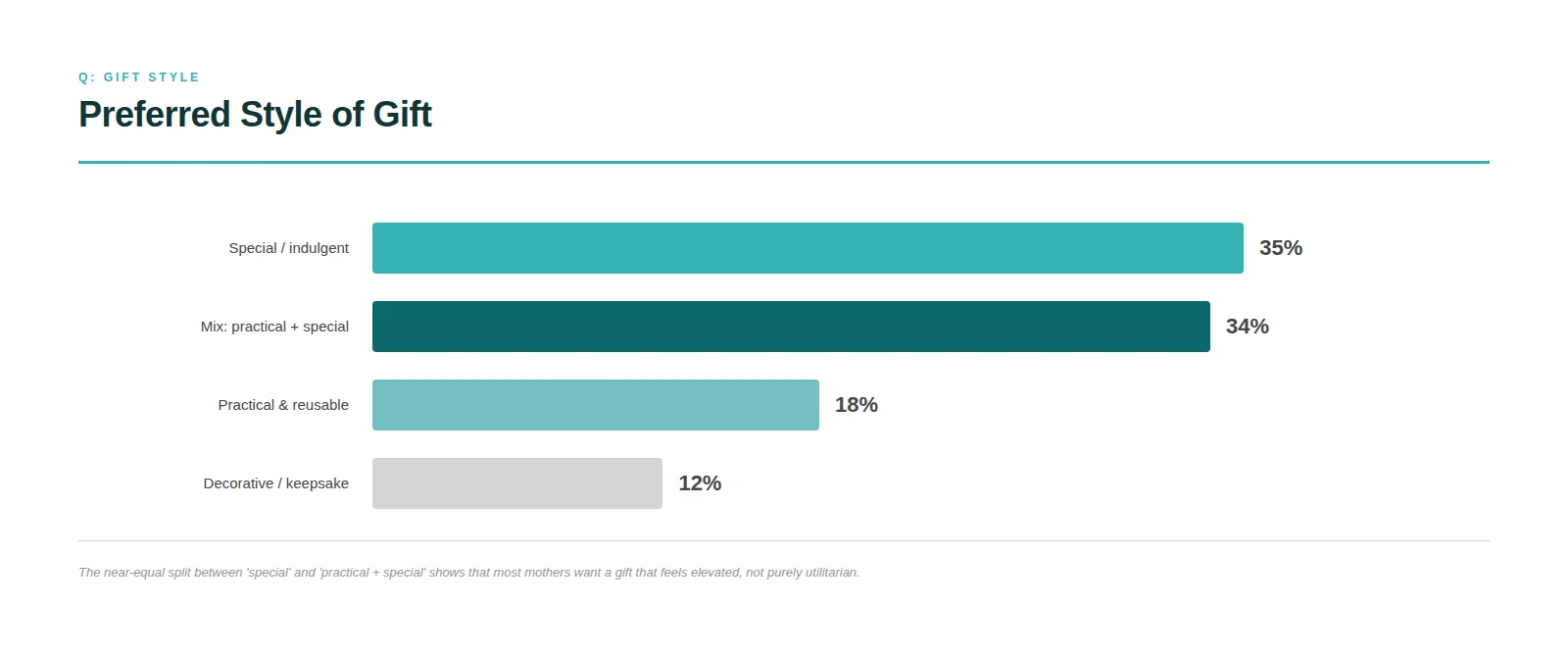
That tells us something important.
Most mums are not rejecting practical gifts. Anyone managing work and family life knows how valuable practical support can be. But on Mother’s Day, practicality alone is not always enough.
There is still a strong desire for a gift to feel like a gesture rather than an errand.
That might mean a present that feels a little more personal than purely functional. It might mean something linked to a favourite memory, a family in-joke or a stage of life that deserves to be marked. The message seems clear: usefulness is welcome, but emotional meaning still matters.
Life stage can shape what feels thoughtful
The survey also suggested that age and stage of life influence what mums value most.
Among younger mums aged 18 to 29, there was stronger openness to personalisation, visible effort and more expressive gifting. The 30 to 44 age group appeared more balanced, tending to be open to both personalised and non-personalised gifts as long as they felt well-chosen. Among mums aged 45 and over, there was a clearer lean towards experiences, practical help, and gifts that make life easier.
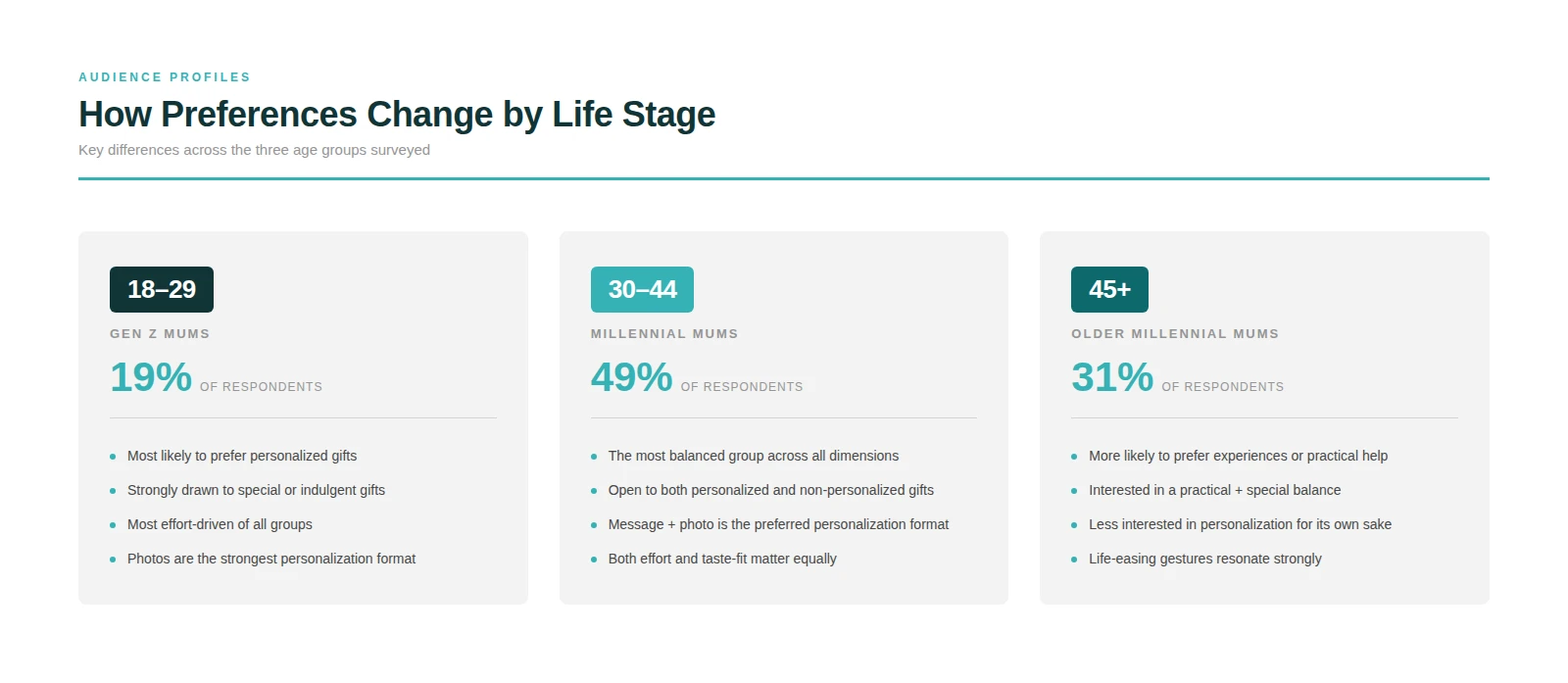
That shift will feel familiar in many families.
What feels thoughtful in one phase of motherhood may not feel the same in another. For some mums, the ideal gift is sentimental and memory-led. For others, it may be something that offers comfort, ease, or quality time.
Neither is more valid. They simply reflect different realities.
What families can take from this
The real takeaway from the MYPICTURE survey is not that every Mother’s Day gift should be personalised.
It is that the most meaningful gestures are the ones that feel considered.
For working parents, that is useful because it takes some of the pressure away from perfection. Mother’s Day does not have to be about getting everything exactly right. It can be about showing appreciation in a way that feels personal, sincere, and emotionally relevant.
That might mean a gift linked to a memory. It might mean a handwritten message. It might mean choosing something small but thoughtful because it reflects who she is now, not just the occasion itself.
In other words, the gifts that resonate most are rarely the most formulaic. They are the ones that show somebody was paying attention.
More meaning, less formula
There is no shortage of Mother’s Day gift guides at this time of year. But the more interesting question is not what people are buying. It is what actually feels meaningful when it arrives.
If this survey suggests anything, it is that mums are not asking for perfection. They are asking for sincerity.
Not something generic.
Not something chosen out of obligation.
Not something that looks right but says very little.
Just something that feels true.
And for busy families, that may be the most helpful way to think about Mother’s Day: less formula, more meaning.



From Family Factory Roots to Supermarket Shelves: The Inspiring Rise of Good Bubble
From a family toiletries business to landing in 268 Sainsbury’s stores nationwide, Manchester sisters Amy Lister and Sally Wordsworth share how resilience, skin-kind ingredients, and the Gruffalo helped Good Bubble reach supermarket shelves.
Ready to Get Your Sh*t Together? Join BROOD’s Free Q4 Masterclass Series
Ready to finish 2026 strong? BROOD is hosting 4 FREE online mini-masterclasses from 14–17 September covering Goal Setting, Time Blocking, Money Mindset, and Visibility. Register your free spot today!

Beyond the Manosphere: Why Boys Need Men Who Speak Up
Dr Carolyne Keenan explores how online manosphere narratives impact young men and explains why positive male role models are essential for shaping a healthy, grounded vision of masculinity

Parenthood Unfiltered: The First Good Dad I Ever Knew
Rachaele Hambleton (Part Time Working Mummy) reflects on growing up without a positive father figure, escaping domestic abuse, and how finding a true partner changed everything for her and her six children. A moving look at presence, healing, and what makes a truly good dad.
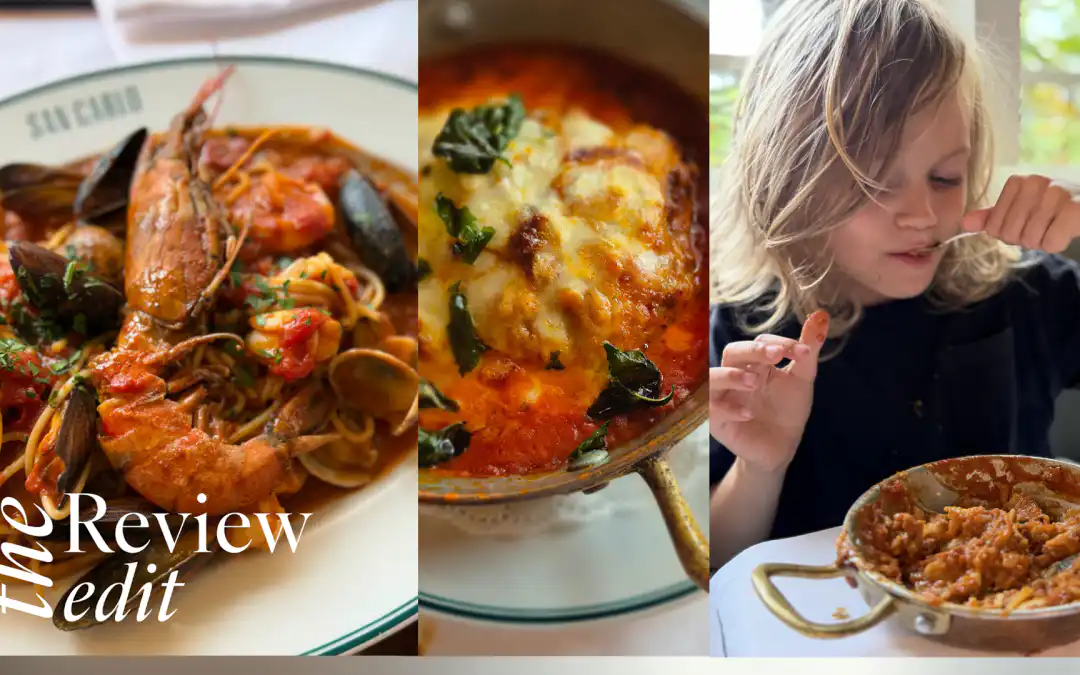
Escape the Chaos & The Family Lunch: Food Review
Escape the chaos of the summer holidays and moving boxes with a true taste of Italy. Join us for a family-friendly review of San Carlo Alderley Edge, featuring their fantastic new kids’ menu, authentic Italian dishes, and a stress-free dining experience for parents and children alike.
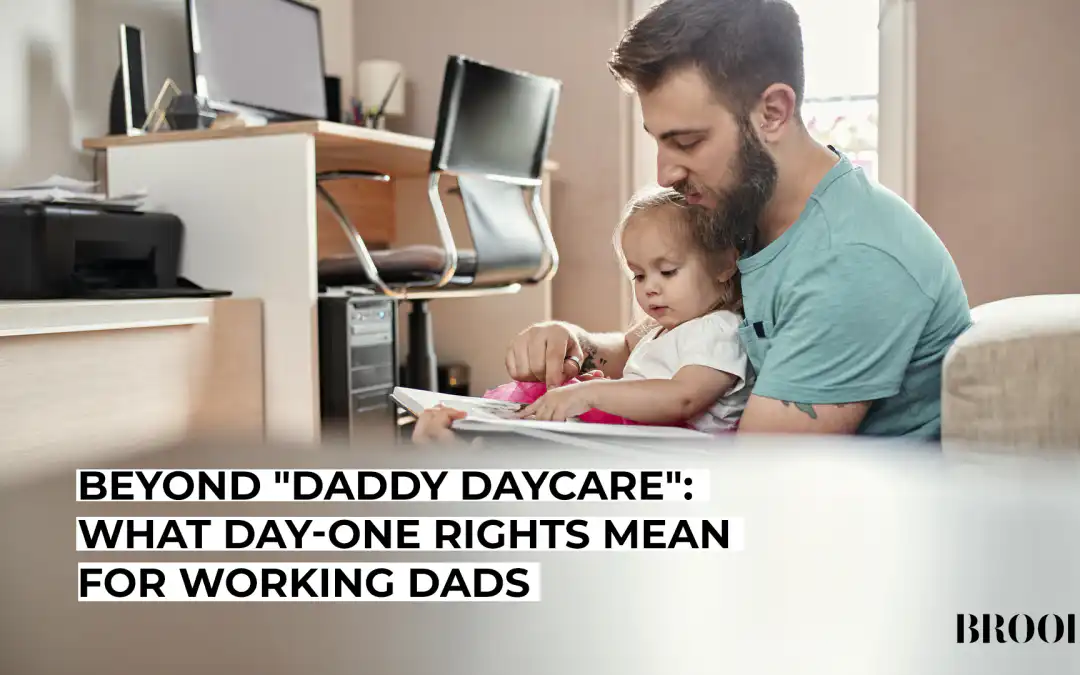
Beyond “Daddy Daycare”: What Day-One Rights Mean for Working Dads
From day-one flexible working requests to dismantling outdated “daddy daycare” tropes, the UK workplace landscape is shifting. Discover what the new legislation means for working fathers, co-parenting equality, and your career.
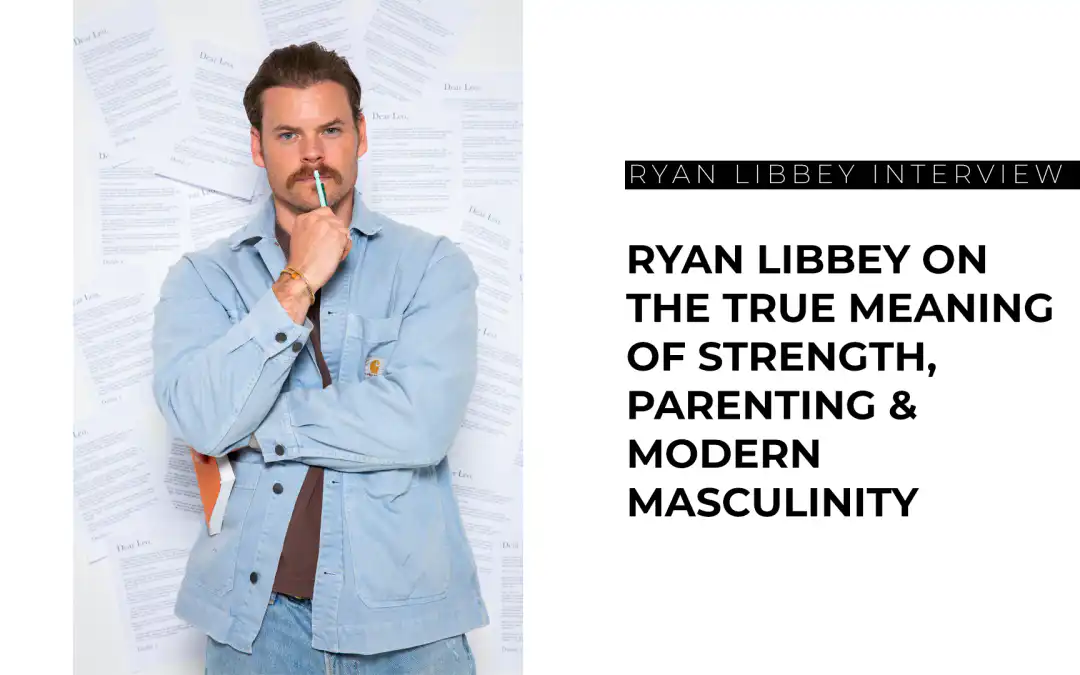
Ryan Libbey on the True Meaning of Strength, Parenting & Modern Masculinity
Fatherhood and a traumatic first year reshaped Ryan Libbey’s understanding of true strength, partnership, and modern masculinity. From navigating primary caregiving and supporting his partner Louise through medical trauma to writing “Letters to Leo” and challenging the noisy toxicity of the “Manosphere,” Ryan shares his honest, vulnerable journey on what it really means to show up as a present dad.

Back to School 2026: The Ultimate Kids’ Essentials & Parent Hacks
Back to School Special Back to School 2026: The Ultimate Kids’ Essentials & Parent Hacks From seamless uniform upgrades to smart tech that keeps kids focused and safe, here is our editorial edit for the new school term. Between sorting uniforms, replacing outgrown...
Why Learning a Language as a Busy Parent Is One of the Best Things You Can Do (And How to Actually Make It Happen)
Travel Why Learning a Language as a Busy Parent Is One of the Best Things You Can Do (And How to Actually Make It Happen) No classroom. No fixed timetable. Just you, a real tutor, and a skill that'll stick around for life. When was the last time you did something...

Ibiza Comes to London: Why the Alto x Cotton Beach Club Collab Belongs on Every Parent’s Night-Off List
Ibiza isn’t on the cards for most of us this summer — but that doesn’t mean you can’t get a taste of it. Alto by San Carlo has partnered with the iconic Cotton Beach Club Ibiza for two exclusive evenings on the rooftop of Selfridges, London. Think sun-soaked Mediterranean food, live DJ sets, Champagne and London’s skyline as your backdrop. Two dates only — and honestly? You deserve this one.