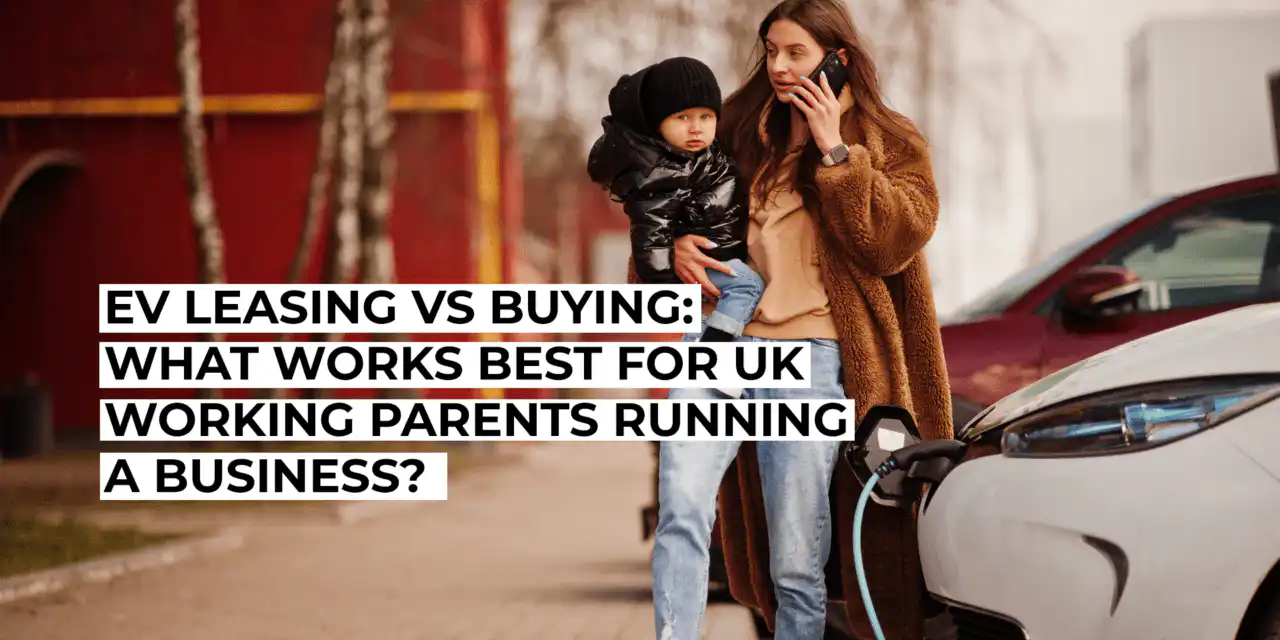
EV Leasing vs Buying: What Works Best for UK Working Parents Running a Business?
As the UK moves closer to the 2035 ban on new petrol and diesel cars, businesses across the country are facing a significant decision regarding their fleet strategy. Transitioning to electric vehicles (EVs) is no longer a futuristic concept but a practical necessity for firms looking to reduce their carbon footprint and take advantage of various tax incentives. However, the path to electrification often leads to a fundamental question: should a company own its electric fleet outright, or is leasing a more strategic choice?
The choice between these two models involves more than just comparing monthly payments against a lump sum purchase price. It requires a deep dive into cash flow management, maintenance responsibilities, and the rapid pace of technological change in the battery market. Now let’s dive in and discover which model provides the greatest value and flexibility for your organisation’s journey toward sustainable transport.
The Financial Flexibility of Business Car Leasing for EVs
Leasing has become an incredibly popular route for businesses because it avoids the heavy upfront costs associated with purchasing premium electric cars. Instead of tying up significant capital in depreciating assets, companies can pay a fixed monthly fee. This allows for better cash flow management and ensures that capital remains available for core business operations or other strategic investments.
When looking at business car leasing for EVs, firms often find that these agreements include several essential services that simplify fleet management. Many providers bundle maintenance, breakdown cover, and even road tax into a single payment. This predictable cost structure removes the risk of unexpected repair bills, which can be particularly high for newer electric technologies.
Furthermore, leasing protects businesses from the risks of depreciation. The resale value of used EVs can be unpredictable as newer models with better range and faster charging capabilities enter the market. By choosing a lease, the business doesn’t need to worry about the future market value of the car; they can simply return the vehicle at the end of the contract and upgrade to the latest model.



The Long-Term Perspective of Ownership
Ownership remains an attractive option for companies that prefer to have total control over their assets. When a firm buys a vehicle, there are no mileage restrictions or wear-and-tear penalties to consider. This is particularly beneficial for businesses whose drivers cover high annual distances or for those who plan to keep their vehicles for more than five or six years.
While the initial investment is higher, owning an EV can eventually lead to lower total costs over a very long period once the purchase price is amortised. Additionally, UK firms can benefit from capital allowances. For example, some electric cars qualify for a 100% first-year allowance, letting businesses deduct the full cost of the vehicle from their pre-tax profits in the year of purchase.
However, ownership means the business is responsible for every aspect of the vehicle’s life cycle. This includes sourcing insurance, managing servicing schedules, and eventually handling the disposal or sale of the car. For smaller teams without a dedicated fleet manager, these administrative tasks can become a significant burden that outweighs the benefits of asset ownership.
Comparing Operational Impact
The operational differences between these two methods often dictate which path a firm chooses. A leased fleet is typically refreshed every three to four years, ensuring that employees are always driving vehicles with the latest safety features and the most efficient battery technology. It’s a great way to maintain a modern company image and keep staff morale high with high-spec vehicles.
Ownership offers different operational freedoms. A company might choose to wrap its own vehicles in permanent branding or install specific aftermarket hardware without needing permission from a third-party owner. If a business has a fluctuating headcount, owned vehicles can be reassigned or sold at any time, whereas terminating a lease early often results in financial penalties.
The Big Picture
Deciding which method works best depends on your specific business profile and financial priorities. If your firm values stability, low administrative overhead, and the ability to frequently update your technology, leasing is likely the superior choice. It’s an easy way to scale a fleet up or down as the company grows without the stress of managing vehicle lifecycles.
On the other hand, if you have ample capital and prefer the freedom of an unrestricted asset, ownership might suit your long-term strategy. It’s important to consult with a financial advisor to understand how each option affects your tax position and balance sheet under current UK regulations.


Back to School 2026: The Ultimate Kids’ Essentials & Parent Hacks
Back to School Special Back to School 2026: The Ultimate Kids’ Essentials & Parent Hacks From seamless uniform upgrades to smart tech that keeps kids focused and safe, here is our editorial edit for the new school term. Between sorting uniforms, replacing outgrown...

Why Learning a Language as a Busy Parent Is One of the Best Things You Can Do (And How to Actually Make It Happen)
Travel Why Learning a Language as a Busy Parent Is One of the Best Things You Can Do (And How to Actually Make It Happen) No classroom. No fixed timetable. Just you, a real tutor, and a skill that'll stick around for life. When was the last time you did something...

Ibiza Comes to London: Why the Alto x Cotton Beach Club Collab Belongs on Every Parent’s Night-Off List
Ibiza isn’t on the cards for most of us this summer — but that doesn’t mean you can’t get a taste of it. Alto by San Carlo has partnered with the iconic Cotton Beach Club Ibiza for two exclusive evenings on the rooftop of Selfridges, London. Think sun-soaked Mediterranean food, live DJ sets, Champagne and London’s skyline as your backdrop. Two dates only — and honestly? You deserve this one.

Lisa Johnson: From £30K Debt to Multi-Millionaire – How a Mum of Two Built a Freedom-Focused Business
Discover how Lisa Johnson, award-winning entrepreneur and mum of twins, went from £30,000 in debt to building a multi-million-pound business in just seven years. In this exclusive interview, Lisa shares her journey through adversity, her strategies for scaling with passive income, and her honest advice for parents and entrepreneurs seeking financial freedom, work-life balance, and lasting impact. Keywords: Lisa Johnson, entrepreneur, passive income, business strategy, work-life balance, financial freedom, mumpreneur, online business, success story.

School Holiday Jigsaw: Surviving the Summer Holidays as a Working Parent
School Holiday Jigsaw: Surviving the Summer Holidays as a Working Parent
For school children, the six-week break is a magical expanse of unstructured freedom. For working parents, it marks the beginning of a military-grade logistical operation. Between the skyrocketing costs of summer camps, tag-teaming annual leave with partners, and attempting the ultimate high-wire act of working from home with a laptop on your knee, the math of July and August simply doesn’t add up. We dive deep into the reality of trying to fit a 19th-century agricultural school calendar into a 21st-century digital economy—and explore the progressive workplace shifts needed to save our sanity.

The Cognitive Crutch: Are We Outsourcing Our kid’s Brains to AI?
The Cognitive Crutch: Are We Outsourcing Our Children’s Brains to AI?
Generative AI has transitioned from a novel tech trend to a permanent classroom fixture. But as tools like ChatGPT effortlessly handle the heavy cognitive lifting of writing essays and solving equations, educators and neuroscientists are raising an urgent alarm. True learning is rooted in the cognitive friction of arriving at an answer. By outsourcing that struggle to machines, are we causing intellectual stamina to atrophy, leaving behind a generation of brilliant curators who have lost the ability to think independently? From primary schools to university campuses, the data reveals a stark shift from active learning to passive “cognitive offloading.”

The Big 2026 British Playcation: The Ultimate Free, Low-Cost & Premium Summer Days Out
The six-week school summer holidays are here, but keeping kids entertained shouldn’t break the bank. With new data showing a massive “play gap” across the UK, we’ve rounded up 11 of the absolute best national initiatives, free community festivals, heavily discounted active-play passes, and premium family adventures to help you balance the budget while creating unforgettable summer memories.

Why the UK is Suddenly Going All Out for Graduation Season
Discover why British graduations are becoming massive lifestyle events and explore San Carlo’s new summer menu—the perfect way to celebrate in style.

New ‘xV’ Campaign Launches “The Unspoken Stat” to Expose Hidden Domestic Abuse Spike Around England Matches
A powerful new World Cup campaign introduces “xV” (Expected Violence) to expose a chilling reality: research shows domestic abuse incidents spike by 38% when England loses and 26% even when they win. Backed by survivors, sports figures, and celebrities like Mel B, the campaign demands that this hidden statistic receives the same urgent attention as modern football data.

Banning Social Media Under 16: What the New UK Law Means for Parents
The UK government has announced a landmark social media ban for children under 16. From affected apps to enforcement timelines, here is what the “Australia Plus” model means for busy working parents and family life.